Table of Contents
- Repairing High-Quality Luxury Hotel Furniture: Why Prevention and Maintenance Matter
- Range of Services in High-End Hotel Furniture Restoration
- Costs and Cost-Effectiveness of Hotel Furniture Repair
- Sustainability and Value Preservation Through Professional Furniture Repair
- Professional Hotel Furniture Care: On-Site Service and Workshop Repair
- Step-by-Step Guide: Repair Process for Hotel Room Furniture
- Avoiding Common Mistakes in Hotel Furniture Repair
- Specialization in Gastronomy and Hospitality: Why Expertise Matters
Last updated: July 21, 2026
Repairing Luxury Hotel Furniture: A Guide to Value Preservation and Longevity
The repair of high-quality luxury hotel furniture is a strategic investment that is often underestimated. Professional restoration saves significant costs and preserves the authenticity of the interior. Demotex GmbH and companies like Casa Padrino know from decades of experience that timely maintenance makes the difference between short-term expenses and long-term value preservation.
This guide shows you how to optimally maintain luxury furniture in hotel operations, which repair methods are available, and why prevention is more cost-effective than constant replacement.
Repairing High-Quality Luxury Hotel Furniture: Why Prevention and Maintenance Matter
Daily use by guests leaves its mark: scratches on wooden surfaces, wear and tear on upholstery, stains on textiles. The problem arises when these signs of wear are not systematically addressed. Minor damage grows into major issues. Torn upholstery becomes a safety hazard. A neglected wooden surface begins to turn gray.
Structured maintenance with regular inspections and quick repairs not only extends the life of your furniture but also keeps it in a condition that conveys luxury to your guests. A hotel with well-maintained furniture looks high-end; one with visible damage looks neglected.
Typical Damage Patterns in the Hospitality Industry
Upholstered furniture suffers from intensive use: seats sag, seams rip open, and upholstery fabrics wear unevenly. Wooden furniture shows scratches, dents, and signs of wear on edges and corners. Leather surfaces crack without proper care. Metal fittings oxidize, especially in damp bathrooms.
Damage that compromises hygiene and safety is critical: a tear in upholstery can become a breeding ground for pests. A loose leg is a tripping hazard. A damaged cover can no longer be thoroughly cleaned.
Value Preservation Through Timely Intervention
A baroque armchair from Casa Padrino costs several thousand euros to purchase new. After five years of intensive hotel use with torn upholstery and a scratched wooden frame, it loses its value. Timely restoration costs a fraction of the price of a new purchase and restores it to its original condition.
This also preserves design continuity. If you have to replace individual pieces of furniture, your room concept becomes fragmented. New pieces may not match the remaining furniture perfectly. With professional restoration, the overall concept remains intact. High-quality furniture is often unique or part of a limited series and cannot be easily replaced.
Range of Services in High-End Hotel Furniture Restoration
Professional furniture restoration is a specialized craft that requires deep material knowledge, technical skills, and artistic understanding. Demotex GmbH and similar specialist companies offer a wide range of services that go far beyond simple repairs.
Upholstery Work and Reupholstering of Contract Furniture
Upholstered furniture is the heart of the hotel industry. When the upholstery is damaged, a simple patch is no longer enough.
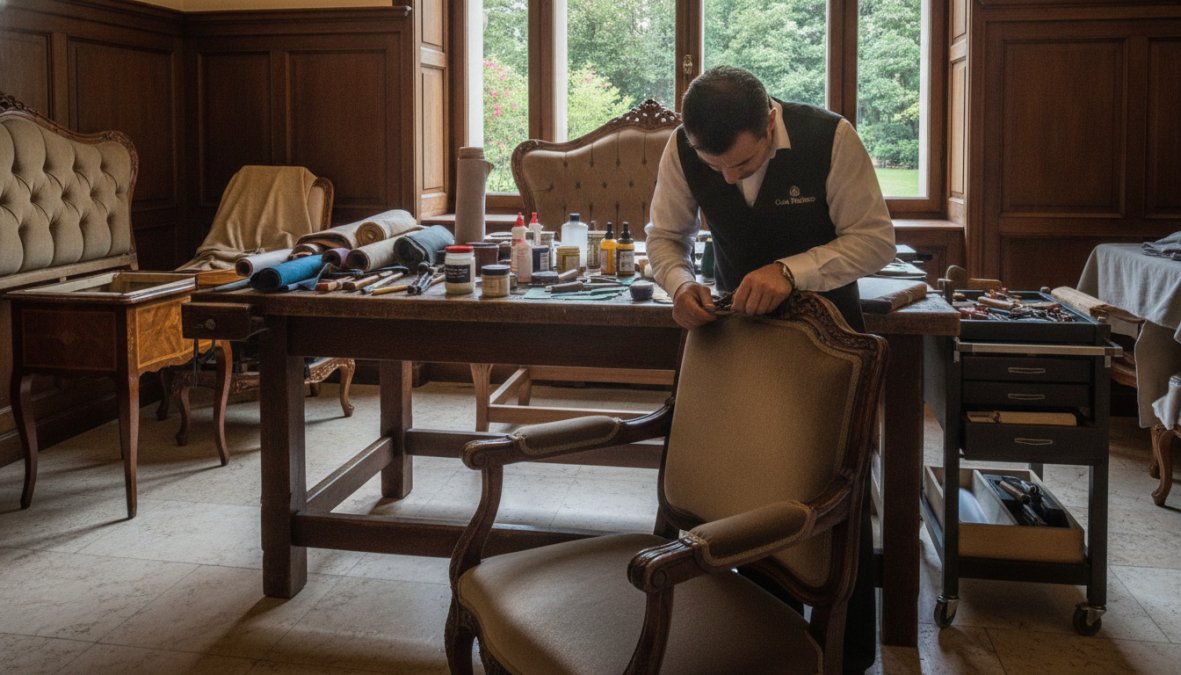
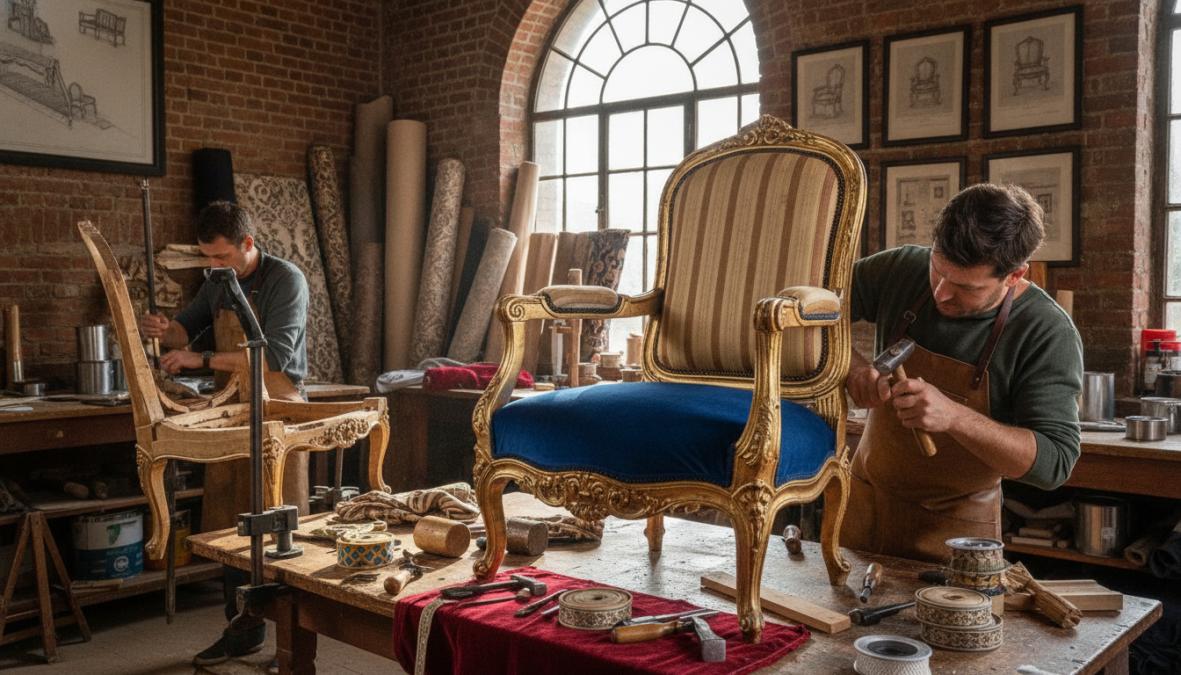
Professional upholstery work begins with disassembly. The old upholstery material is removed, and the wooden frame is inspected. Damaged parts are repaired or replaced. The spring core is checked and renewed if necessary.
Then comes the reupholstering. The craftsman selects a fabric that matches the original, or a better one if the original material is no longer available. High-quality upholstered furniture requires craftsmanship in cutting and sewing. The final result should not look like a repair, but like a restored original piece.
For hotel furniture, the choice of material is critical. The fabric must be durable, easy to clean, and meet fire protection requirements.
Surface Treatment and Wood Restoration
Wooden furniture is the backbone of luxury hotels. Scratches, dents, and stains are inevitable. The question is: how are they removed?
Surface treatment begins with an accurate diagnosis. Are they superficial scratches or deep dents? Is the surface lacquered, waxed, or oiled? Different materials require different treatments.
For light scratches, a touch-up solution may suffice. For deeper dents, the surface must be sanded down – with sensitivity, so as not to destroy the surface structure. Sanding is followed by surface refinement with multiple coats of finish for durability and shine.
The restoration of marquetry, ornaments, and carvings is particularly demanding, requiring specialized craftsmanship and artistic understanding.
Leather Repair and Textile Cleaning
Leather requires special care. Superficial scratches can be treated with special creams. Deeper cracks require cleaning, preparation, and treatment with special adhesives and color pigments so that the repair becomes invisible.
When it comes to stains, it depends on the type. A specialized craftsman will first test on inconspicuous areas to ensure that the cleaning does not damage the leather.
Textile cleaning is equally specialized. High-quality fabrics cannot simply be put in the washing machine. Professional textile cleaning uses special solutions and processes to remove dirt without damaging the material.
Costs and Cost-Effectiveness of Hotel Furniture Repair
Repairs are an investment in value preservation and longevity, not just a cost factor.
Repair vs. New Purchase: Cost-Benefit Analysis
The central question: When is a repair worth it, and when is a new purchase more economical?
Rule of thumb: If the repair costs are below 40-50 percent of a new purchase, a repair is almost always more economical. You gain the remaining lifespan of the furniture piece. A restored armchair will last another five to ten years.
| Scenario | Repair Costs | New Price | Decision |
|---|---|---|---|
| Minor upholstery damage | 15-25% | 100% | Repair |
| Surface scratches | 5-10% | 100% | Repair |
| Comprehensive reupholstering | 30-45% | 100% | Repair |
| Structural damage | 60%+ | 100% | Evaluate |
An often overlooked factor is availability. A damaged baroque armchair from Casa Padrino cannot simply be replaced by another model. Restoration solves this problem immediately.
Repairs are more economical than new purchases as long as the costs are below 50 percent of the price of a new item. For high-quality designer furniture, the decision is even clearer.
ROI Through Longevity and Value Preservation
The return on investment of professional furniture repair is often underestimated. A luxury hotel thrives on its ambiance. Guests pay premium prices because they expect everything to be flawless. A room with damaged furniture looks cheap. Restoration restores the premium ambiance and thus justifies higher room rates.
Over ten years: An armchair is damaged. Option A: Replacement (full price of a new item). Option B: Restoration (35-40% of the price of a new item). With Option B, you not only save on repair costs but also gain another five to ten years of use.
A consistently maintained, restored room retains its value. A room where individual pieces of furniture are gradually replaced looks incoherent and loses value.
Sustainability and Value Preservation Through Professional Furniture Repair
The repair of high-quality luxury hotel furniture is an act of sustainability.
Environmental Responsibility in the Hospitality Industry
Every new piece of furniture has an ecological footprint: raw material extraction, production, transport. If you restore existing furniture instead, you save these environmental costs.
This is highly relevant for hotels with sustainability certifications. A hotel that restores its furniture instead of constantly replacing it can communicate this as a sustainability feature and attract eco-conscious guests.
A replaced piece of furniture ends up in a landfill. A restored piece of furniture remains in the cycle. This is ecologically sensible and economically advantageous.
Craftsmanship and Longevity as a Sustainability Factor
True craftsmanship is sustainable. A chair restored by hand is treated with care. Such furniture lasts longer because it is better made.
Industrially manufactured mass products are often not designed for longevity. Luxury furniture is different. A baroque armchair from Casa Padrino can last a hundred years – if it is cared for.
Professional restoration says: this piece of furniture is valuable enough to be preserved. It is not a disposable item, but a piece of culture and craftsmanship.
Communicate your restoration efforts to your guests. A sign in the room explaining that the furniture was restored by hand reinforces the impression of quality and sustainability.
Professional Hotel Furniture Care: On-Site Service and Workshop Repair
There are two fundamentally different approaches: On-site service and workshop repair.
On-Site Service for Minimal Business Disruption
Some damage can be repaired directly in the hotel. A craftsman comes to the room, repairs the furniture, and is gone. The advantage: the room is quickly usable again.
On-site service is suitable for surface treatments, leather repairs, textile cleaning, minor upholstery corrections, and metal part repairs.
The disadvantage: not all work can be carried out on-site. Comprehensive reupholstering requires specialized tools and materials.
Workshop Repair for Complex Restorations
For extensive restorations, the workshop is the right place. The craftsman has the time, tools, and materials to work thoroughly.
Workshop repairs are suitable for comprehensive upholstery work with reupholstering, wood restoration, structural repairs to the frame, and restoration of carvings.
The disadvantage: the room is blocked during the repair. Ideally, several pieces of furniture are sent for repair at the same time. Some hotels work with temporary replacement stock to continue renting out the room.
Step-by-Step Guide: Repair Process for Hotel Room Furniture
Step 1: Damage Assessment and Material Analysis
It all begins with a precise analysis. The specialist systematically inspects the piece of furniture: What damage is visible? How severe is it? Is there hidden damage?
At the same time, the material is analyzed: Which wood? Which fabric? Which leather? Which surface treatment? This information is crucial because the restoration must be matched to the original.
The result is a detailed report with all damage and a repair plan – your basis for the decision.
Step 2: Cleaning and Surface Preparation
Before the actual repair begins, the piece of furniture is thoroughly cleaned. Dust, dirt, and old surface treatments must be removed.
For wooden furniture, this is done by sanding with different grits. For upholstered furniture, the old upholstery is removed and the frame is inspected. For leather and textiles, a special cleaning is carried out.
Step 3: Repair and Refinement
The craftsman works according to the repair plan. For wooden furniture: repair dents, fill scratches, repair or replace damaged parts, then apply surface refinement. For upholstered furniture: check the spring core, apply new upholstery, cut and sew new fabric. For leather: fill and dye cracks, treat scratches, preserve the surface.
Step 4: Quality Control and Acceptance
Before the piece of furniture goes back to the hotel, it is thoroughly checked. A professional company does this systematically – the inspection is carried out by a person other than the craftsman who repaired it.
Only after passing quality control is the piece of furniture returned to the hotel.
Inspect the piece of furniture yourself. Check whether the repair was carried out cleanly. If something is not right, report it immediately. Good craftsmen stand by their work.
Avoiding Common Mistakes in Hotel Furniture Repair
Lack of Specialization and Material Knowledge
The biggest mistake: working with a craftsman who has no experience with luxury furniture. High-quality furniture requires specialized knowledge. An unqualified craftsman will make mistakes – and these are often irreversible.
Solution: Only work with specialist companies that have experience with luxury furniture. Ask for references and look at completed projects.
Excessive Business Disruptions
If you block a room for three weeks because the furniture is being repaired, you lose revenue. This must be factored into the cost-benefit calculation.
Solution: Plan repairs during quiet periods. Use temporary replacement stock if possible. Prioritize repairs by urgency.
Insufficient Documentation of Damage Causes
When a piece of furniture is damaged, it is important to understand why. Was it wear and tear? Misuse by a guest? A design flaw? This information helps you avoid similar damage in the future.
Solution: Document every damage with photos and a description.
Specialization in Gastronomy and Hospitality: Why Expertise Matters
Not all restoration companies are the same. Some specialize in gastronomy and hospitality with additional requirements and certifications.
Fire Protection and Hygiene Certifications
Special requirements apply in hotels and gastronomy. Furniture must meet fire protection standards. Fabrics must be flame-retardant. Upholstery material must have specific certifications.
A specialized company knows these requirements and selects materials that meet the standards. They will provide the necessary certificates.
At the same time, hygiene standards apply. Furniture must be easy to clean. Materials must be hygienic.
Contract Furniture and Star-Hotel Standards
Contract furniture differs from residential furniture. It must be more durable, cleaned more frequently, and withstand higher loads.
A five-star hotel expects every piece of furniture to be flawless. A specialized restoration company understands these standards and carries out restorations that meet them.
Casa Padrino and similar providers of luxury furniture often work with such specialized companies.
The repair of high-quality luxury hotel furniture is a strategic investment in value preservation, aesthetics, and sustainability. By professionally maintaining your furniture, you save costs, preserve your design concept, and show your guests that quality is important to you.
Discover the exclusive collection from Casa Padrino and learn how high-quality luxury furniture is designed for the hotel industry. With over 20 years of experience in international hotel projects, Casa Padrino offers not only exceptional furniture pieces but also the expertise to preserve them in the long term. Visit Casa Padrino today and be inspired by the craftsmanship of European luxury furniture.
Frequently Asked Questions
Why should hotels repair luxury furniture instead of replacing it?
Repairing high-quality luxury hotel furniture offers several advantages over buying new. First, professional maintenance preserves the value and aesthetics of the interior, which is often part of the overall ambiance. Second, in many cases, repair is more economical, especially for solid contract furniture made of fine materials such as solid wood or genuine leather. Third, repair contributes to sustainability and reduces waste. High-quality furniture is designed for longevity and can be preserved for decades through professional restoration.
What types of damage to hotel furniture can be professionally repaired?
The range of services for hotel furniture restoration is extensive: upholstery work and reupholstering of armchairs and sofas, surface treatment and wood restoration for wear and tear, leather repair for scratches and cracks, textile cleaning for stains, as well as the repair of damage to veneer, marquetry, and ornaments. Spring core renewals and the renovation of hotel room furniture with signs of wear are also possible. The craftsmanship makes it possible to professionally repair even complex damage to baroque or rococo furniture.
How long does a professional repair of luxury hotel furniture take?
The duration depends on the scope and complexity of the damage. Simple cleaning and minor surface treatments can be done within a few days. Extensive upholstery work, wood restoration, or specialization in historical styles require several weeks. On-site service minimizes business disruptions, while workshop repairs may be necessary for more complex restorations. A professional service provider will create a realistic schedule after the damage assessment and inform you transparently about the duration of the maintenance.
What role do fire protection and hygiene certifications play in furniture repair?
In the hotel industry, fire protection and hygiene certifications are essential. For upholstery work and textile repairs, it must be ensured that the materials used comply with the applicable fire protection regulations. Specialized service providers for gastronomy and hotels know these standards and use certified materials. Professional furniture care and textile cleaning also contribute to compliance with hygiene standards. These certifications are not optional, but necessary for the safe and compliant operation of upscale establishments.