Table of Contents
- Custom Gastronomy Planning: The Foundation for Exclusive Interiors
- High-Quality Gastronomy Furniture: Material Selection and Surface Texture
- Luxury Restaurant Design: Color Concepts and Emotional Impact
- Lighting Concepts for Luxury Gastronomy: Atmosphere and Functionality
- Anchoring Corporate Identity and Branding in the Interior
- Sustainability and Durability in Gastronomy Interiors
- ROI of Interior Design: Profitability and Guest Experience
- Legal Requirements: Fire Safety and Accessibility
Planning Exclusive Interiors for Luxury Gastronomy: Step by Step
Last updated: July 28, 2026
Planning an exclusive interior for luxury gastronomy requires far more than just selecting beautiful furniture. It is about creating a holistic feel-good atmosphere that enchants your guests from the moment they step through the door. At Casa Padrino, we understand that every detail – from room geometry and material selection to lighting design – has a decisive influence on the dining experience. In this comprehensive guide, we will show you how to plan an exclusive interior for luxury gastronomy that not only impresses aesthetically but is also functionally tailored perfectly to the needs of your business.
The hospitality industry in Germany is increasingly focusing on quality and individuality. Restaurants that stand out through custom-tailored interior designs achieve higher guest satisfaction and longer dwell times. This begins with strategic space planning that takes both the emotional and practical dimensions into account.
Custom Gastronomy Planning: The Foundation for Exclusive Interiors
Successful gastronomy planning starts with an honest analysis of your spatial conditions and operational requirements. Many restaurateurs make the mistake of being guided by aesthetic trends without considering the functional realities of their business. This leads to spaces that look impressive but are impractical in daily operations.
Space Analysis and Floor Plan Design
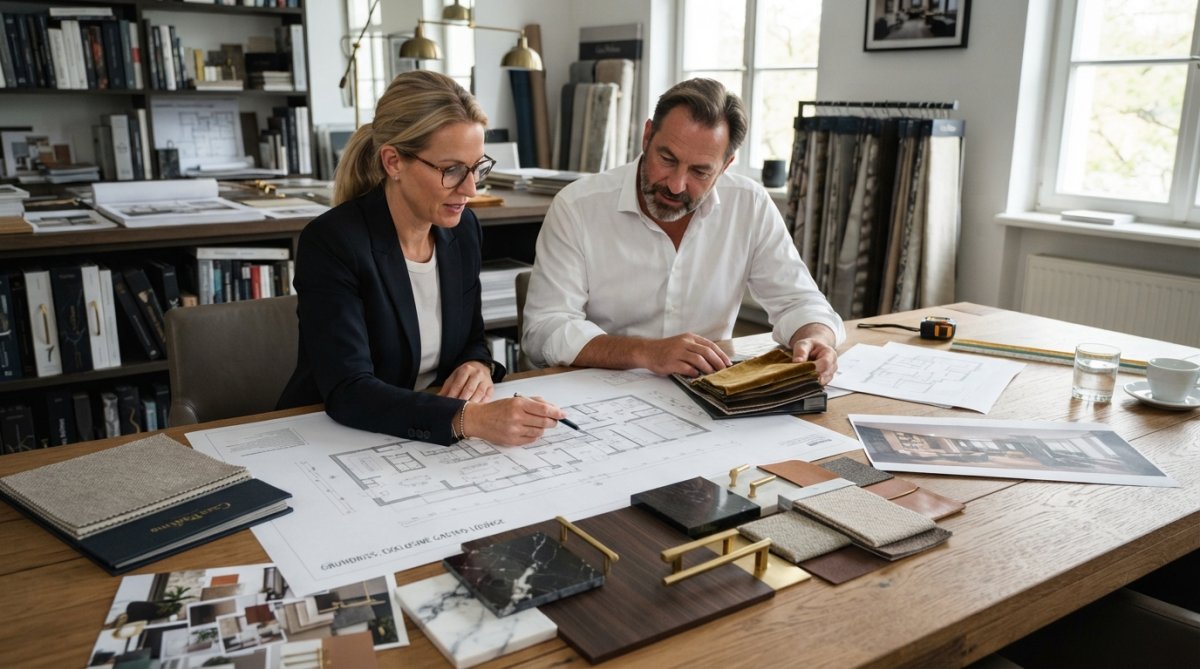
The first step in planning an exclusive interior for luxury gastronomy is to analyze the space holistically. Do not just measure the square footage, but also capture window placements, door openings, columns, ceiling heights, and angles of light. A 3D scan measurement allows you to create virtual layouts and test different furniture arrangements before placing orders.
The floor plan design must take the natural flow of traffic in the restaurant into account. Guests should find an intuitive path from the entrance to the cloakroom, to the table, and to the restrooms – without detours or confusion. At the same time, service staff must be able to circulate efficiently between the kitchen, bar, and guest area. Finding this balance is the art of contract furnishing.
A common mistake is overcrowding the space. Less is more – especially in luxury gastronomy. Generous spacing between tables creates intimacy and ensures that conversations cannot be overheard from the neighboring table. Casa Padrino offers tailor-made solutions that make optimal use of the available space without overloading it.
Optimizing Pathways and Functionality
Good pathways are invisible – but their absence is noticed immediately. Plan for service paths at least 1.2 meters wide between table groups. For upscale restaurants, it should rather be 1.5 meters. This allows staff to navigate with trays without obstructing guests.
Functionality also extends to accessibility. Accessibility is not only a legal requirement but also a sign of quality and respect. Ramps, wide door openings, and wheelchair-accessible tables should be seamlessly integrated into the design concept – not as an afterthought, but as a natural part of the interior design.
Use floor plans with movable furniture elements (physical or digital) to play through different scenarios. This allows you to visualize the impact of spatial changes before making investments.
High-Quality Gastronomy Furniture: Material Selection and Surface Texture
The choice of furniture is the heart of an exclusive interior design. Gastronomy furniture must meet three requirements: it must look elegant, withstand intensive daily use, and remain timeless.
Solid Wood, Marble and Noble Materials
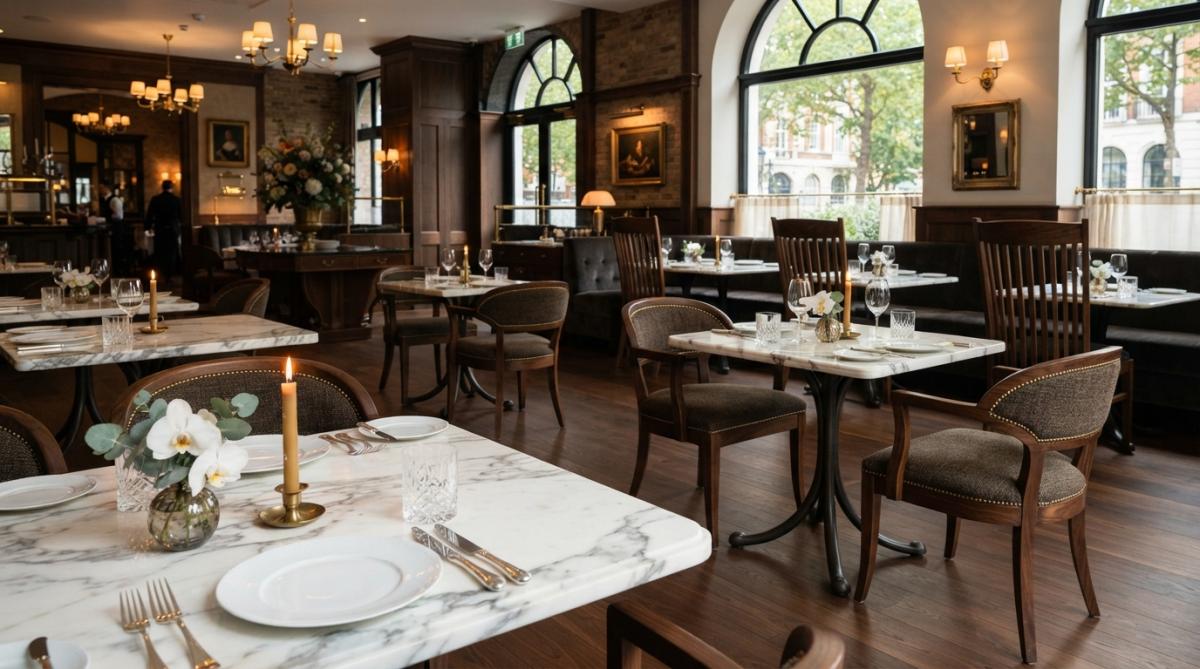
Solid wood is the first choice for upscale restaurants. Woods such as walnut, oak, or cherry develop a noble patina over time and become more beautiful with each passing year. Unlike veneered plywood, solid wood can be repaired, restored, and sanded down if necessary – an investment for decades.
Marble exudes luxury and is practical at the same time. Calacatta, Statuario, or Nero Marquina marble lends an elegant look to counters, buffets, and selected tables. The natural stone is easy to care for and develops a subtle surface change over time, which contributes to the character of the room.
Bronze and other noble metals are ideal accents. Bronze-colored handles, lights, and decorative elements combine elegantly with wood and stone. They are corrosion-resistant and develop a natural patina that radiates authenticity.
Textured fabrics for upholstery should be durable and easy to clean. High-quality linen, cotton, or wool blends in muted colors age better than smooth synthetic fibers. Avoid colors that are too light or too dark – gray-beige, taupe, and cream are timeless and practical.
Cheap plywood furniture with plastic surfaces quickly looks cheap and cannot be repaired. In luxury gastronomy, this is a breach of trust with your guests. Invest in quality that is visible.
Custom-Made Counters and Buffet Systems
One of the strongest opportunities for differentiation is custom manufacturing. Standard furniture rarely fits perfectly into an individual space. Counters and buffet systems should be precisely tailored to the room geometry, workflows, and design concept.
Casa Padrino offers comprehensive custom manufacturing solutions for counter construction and buffet systems. Each piece is manufactured to your exact specifications – from the height and materials to the smallest details such as handle strips or storage shelves. This allows you to create a completely coherent interior design where every element has its place.
Counters are more than functional elements – they are stages. They are the first point of contact between guest and staff. A well-designed counter with elegant proportions, high-quality materials, and thoughtful lighting immediately creates an impression of quality and professionalism.
Buffet systems must be ergonomically thought out. The height should allow guests to take food without bending or stretching. At the same time, the arrangement should offer a clear view of the food and whet the appetite. This is an art that requires experience.
Luxury Restaurant Design: Color Concepts and Emotional Impact
Colors are not decorative – they are psychologically active. They influence hunger, mood, dwell time, and even the perceived quality of the food.
Color Psychology in Premium Gastronomy
Warm colors such as beige, cream, gold, and terracotta stimulate the appetite and create an inviting, intimate atmosphere. They are ideal for upscale restaurants where guests want to relax and enjoy. These colors look timeless and classic – they are the safe choice for long-term investments.
Dark colors such as dark brown, anthracite, or dark gray create elegance and exclusivity. They look mature and sophisticated. However, dark colors require thoughtful lighting so as not to appear gloomy. In combination with light accents and good lighting technology, spaces of great sophistication are created.
Accent colors should be used sparingly. A deep blue, a warm red, or a rich green can be used as a wall accent or in textiles to create visual tension. However, these colors should never dominate – they are seasoning, not the main ingredient.
Avoid trends. Colors that look modern today will look outdated in two years. Focus on timeless combinations that remain elegant over decades. The emotional impact is more important than being trendy.
Lighting Concepts for Luxury Gastronomy: Atmosphere and Functionality
Lighting is the unsung hero of any gastronomy interior. It influences how food looks, how guests feel, and how long they stay.
A professional lighting concept for luxury gastronomy combines several levels: general lighting for safety, accent lighting for drama, table lighting for intimacy, and functional lighting for service areas.
Dimmable lighting is essential. The same light fixture should work brightly in the morning for preparation and dimmed in the evening for romance. LED technology makes this energy-efficient and without heat loss.
Color temperature is crucial. Warm white light (2700K) flatters skin and food. Cool white lighting (4000K+) looks uncomfortable in restaurants. High-quality fixtures with a high color rendering index (CRI 90+) show food and guests in their best light.
Indirect lighting creates atmosphere without glare. Light fixtures should be visibly elegant – they are part of the design. Casa Padrino offers exclusive lighting fixtures that function as art objects while creating perfect lighting conditions.
The best lighting is that which is not consciously perceived – it simply creates the right mood. This requires professional expertise and high-quality components.
Anchoring Corporate Identity and Branding in the Interior
Your interior design is your non-verbal brand. Before you buy even a single piece of furniture, you should know what message your restaurant is meant to convey.
A clear design concept that reflects your corporate identity creates coherence. This does not mean that everything has to look the same – it means it has to fit together. An upscale French restaurant has different design requirements than a modern Asian fusion restaurant.
Consistency is key. The colors, materials, furniture styles, and decorative elements should paint a coherent picture. If you combine elegant Baroque chairs with minimalist tables, it looks unintentional and unprofessional. If you do it deliberately to create a contrast, this contrast must be well-thought-out and elegant.
Signaling effect is important. High-quality materials, noble colors, and thoughtful details signal quality at first glance. Guests decide unconsciously in the first 30 seconds whether they are in a premium restaurant or not. Your interior design should support this decision.
Sustainability and Durability in Gastronomy Interiors
Sustainability is not just a trend – it is a responsibility. Durable furniture is more sustainable than cheap furniture that has to be replaced after a few years.
Solid wood from sustainable forestry, natural fabrics, and high-quality workmanship reduce the ecological footprint. A chair that lasts 20 years is more sustainable than ten chairs that last two years each.
Repairability is an underestimated aspect of sustainability. High-quality furniture can be repaired, restored, and modified if necessary. This allows it to grow with the requirements of your restaurant without constantly buying new furniture.
Casa Padrino works with materials and manufacturing processes that guarantee durability and beauty over decades. This is not only ecologically responsible – it is also economically sensible.
ROI of Interior Design: Profitability and Guest Experience
A common question is: How is the investment in an exclusive interior design justified? The answer lies in several measurable factors.
First: Guests pay for the experience. A restaurant with a well-thought-out, elegant interior design can justify higher prices. Guests are willing to pay more for an overall experience than for food alone.
Second: Dwell time. Guests who are in a pleasant environment stay longer. Longer dwell times mean more beverage sales, more desserts, and more tips. This directly impacts revenue.
Third: Repeat visits and recommendations. An impressive restaurant is recommended. Guests return and bring friends. This is free marketing that is priceless.
Fourth: Staff satisfaction. Staff working in a beautiful, well-thought-out space are happier and more productive. This reduces turnover and improves service.
Fifth: Durability. High-quality furniture lasts for decades. The investment is amortized over many years, not just a few.
Legal Requirements: Fire Safety and Accessibility
While aesthetics are important, they must never compromise safety. Fire protection is non-negotiable.
All materials in public spaces must meet certain fire protection classes. This applies to fabrics, upholstery, wall materials, and even decoration. High-quality materials naturally meet these requirements – cheap materials often do not.
Accessibility according to DIN 18040-1 is legally required. This means:
- Wheelchair-accessible entrances without steps
- Door openings of at least 90 cm width
- Tables in different heights
- Wheelchair-accessible restrooms
- Clearly recognizable paths without obstacles
These requirements should be elegantly integrated into the design concept, not look like an afterthought. A well-designed restaurant is accessible to all guests.
Emergency exits must be clearly recognizable and easy to reach. The arrangement of furniture must not block escape routes. This is a matter of human dignity and responsibility.
| Planning Phase | Focus | Timeframe | Key Action |
|---|---|---|---|
| Analysis & Concept | Space measurement, design concept | 4-6 weeks | Create 3D floor plan |
| Material Selection | Colors, fabrics, wood types | 2-3 weeks | Order and test samples |
| Custom Manufacturing | Counters, buffets, custom builds | 8-12 weeks | Place orders |
| Lighting | Lighting technology, dimmers, fixtures | 3-4 weeks | Finalize lighting plan |
| Installation | Assembly of all elements | 2-4 weeks | Coordinate contractors |
| Finishing Touches | Decoration, final details | 1-2 weeks | Prepare for opening |
Planning an exclusive interior for luxury gastronomy is a complex but rewarding task. It requires an understanding of aesthetics, functionality, psychology, and operational logistics. Every decision – from room geometry and material selection to lighting – impacts the overall experience.
Casa Padrino understands this complexity. With over 20 years of experience in furnishing grand hotels and upscale gastronomy establishments, Casa Padrino offers tailor-made solutions that turn your vision into reality. From custom space planning to high-quality gastronomy furniture to exclusive lighting – every element is manufactured with craftsmanship precision and aesthetic understanding.
Visit Casa Padrino and discover how to plan an exclusive interior for luxury gastronomy that enchants your guests and makes your business successful. With Luxury Furniture, custom contract furnishing, and Hotel Interior Solutions, Casa Padrino creates spaces of timeless elegance.
Frequently Asked Questions
What really defines an exclusive interior in luxury gastronomy?
An exclusive interior for luxury gastronomy is characterized by the combination of high-quality materials such as marble and solid wood, custom-tailored gastronomy concepts, and thoughtful space planning. Casa Padrino utilizes European craftsmanship and timeless design principles to create a feel-good atmosphere that immerses guests in a premium experience and highlights the restaurant’s corporate identity.
How important is lighting when planning exclusive gastronomy?
Lighting concepts are fundamental to the emotional impact of a luxury restaurant. They influence not only the atmosphere but also the perception of food and the quality of the stay. A well-thought-out lighting concept in luxury gastronomy considers accent lighting for statement furniture, indirect illumination for a feel-good atmosphere, and functional brightness in service areas. Casa Padrino integrates lighting as part of the overall design.
Which materials are particularly suitable for high-quality gastronomy furniture?
High-quality gastronomy furniture uses materials that combine elegance and durability: solid wood (oak, walnut), marble for tables and buffets, bronze and gold leaf for accessories, as well as textured fabrics for upholstery. These materials guarantee longevity in professional operations while creating the required luxury look. Casa Padrino selects materials that withstand years of intensive use.
How can individuality and corporate identity be achieved in the interior design of luxury gastronomy?
Individuality is created through custom manufacturing and a coherent color concept that reflects the brand identity. Custom-made counters, buffet systems, and furniture make it possible to implement specific room geometries and design specifications. Casa Padrino offers Bespoke Furniture and Luxury Interior Design that make every gastronomy interior unique and create an unmistakable feel-good atmosphere.