Table of Contents
- Definition and Characteristic Features of Baroque Furniture
- Baroque Furniture Solid Wood: The Foundation of High-Quality Manufacturing
- Luxury Upholstery Fabrics for Baroque Furniture: Velvet, Silk, and Leather
- Ornaments, Inlays, and Surface Finishing
- Fittings and Metallic Applications
- Baroque Furniture Care and Value Retention: Longevity Through Proper Treatment
- Quality Inspection: How to Recognize High-Quality Baroque Furniture
- Conclusion: Investment in Timeless Elegance
Last updated: August 25, 2026
Best Materials for High-Quality Baroque Furniture
The German furniture market is estimated at USD 22.29 billion in 2026 and is expected to reach a value of USD 28.47 billion by 2031 – growing at 5.02 percent annually (mordorintelligence.com). Within this expanding industry, Baroque furniture is experiencing a renaissance that goes far beyond nostalgic collections. Today, they shape upscale living spaces, luxury hotels, and exclusive business premises – not as kitsch, but as a conscious design choice for timeless elegance.
Choosing the right materials determines whether a piece of Baroque furniture lasts for three decades or looks worn out after three years. At Casa Padrino, the renowned manufacturer of luxury hotel furniture and exclusive interior design concepts, we understand that Baroque furniture does not impress through its shapes alone – its substance is the foundation of its value retention. Here, we show you which materials define high-quality Baroque furniture and how to recognize quality before you invest.
Definition and Characteristic Features of Baroque Furniture
Baroque furniture refers to pieces characterized by opulent shapes, rich ornamentation, and luxurious materials that reflect or interpret the design style of the Baroque era (17th-18th century).
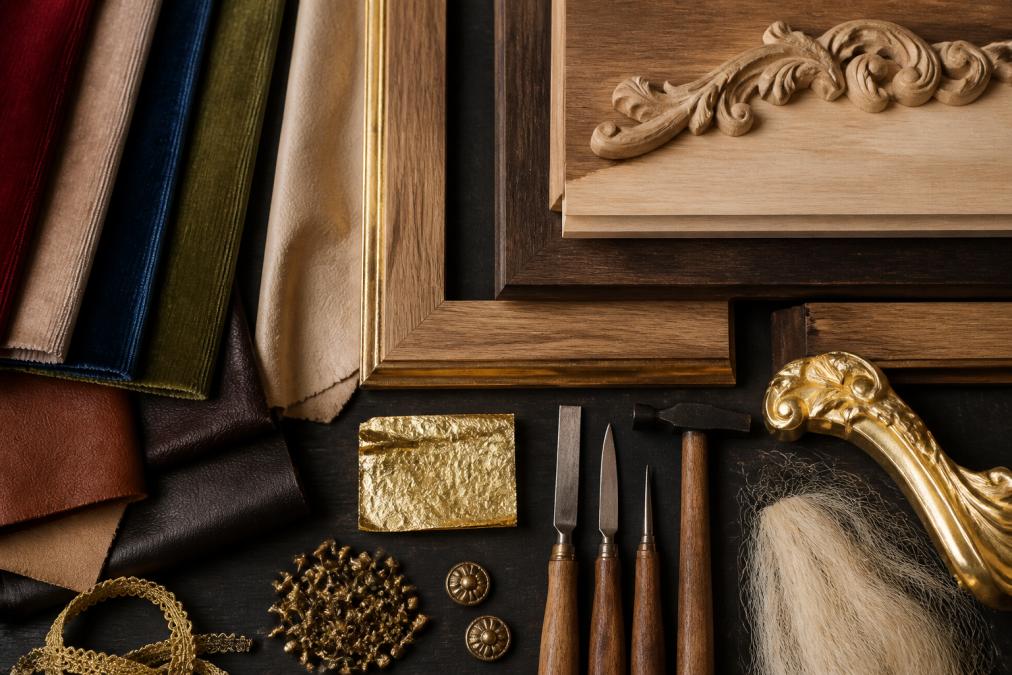
These furniture pieces embody more than just an aesthetic statement – they are craftsmanship in its purest form. Characteristic features include curved lines, elaborate carvings, rich gilding and inlays, as well as the use of solid wood, fine upholstery fabrics, and precious fittings. Every element pursues one goal: to fill the room with presence and elegance.
What distinguishes modern Baroque furniture from historical originals is not the craftsmanship – this remains unchanged – but the accessibility. Baroque furniture is no longer reserved solely for aristocrats, but can also be acquired by a broader range of buyers.
Investing in high-quality Baroque furniture pays off: they form the core of a distinguished interior and develop a patina over the years that increases rather than diminishes their value. The secret lies in the materials that make up these furniture pieces.
Baroque Furniture Solid Wood: The Foundation of High-Quality Manufacturing
Solid wood is the backbone of any serious piece of Baroque furniture. Unlike plywood or MDF boards, solid wood offers durability, repairability, and a natural beauty that deepens over the years. The type of wood determines both the aesthetics and the functionality of the furniture.
Mahogany and Precious Hardwoods
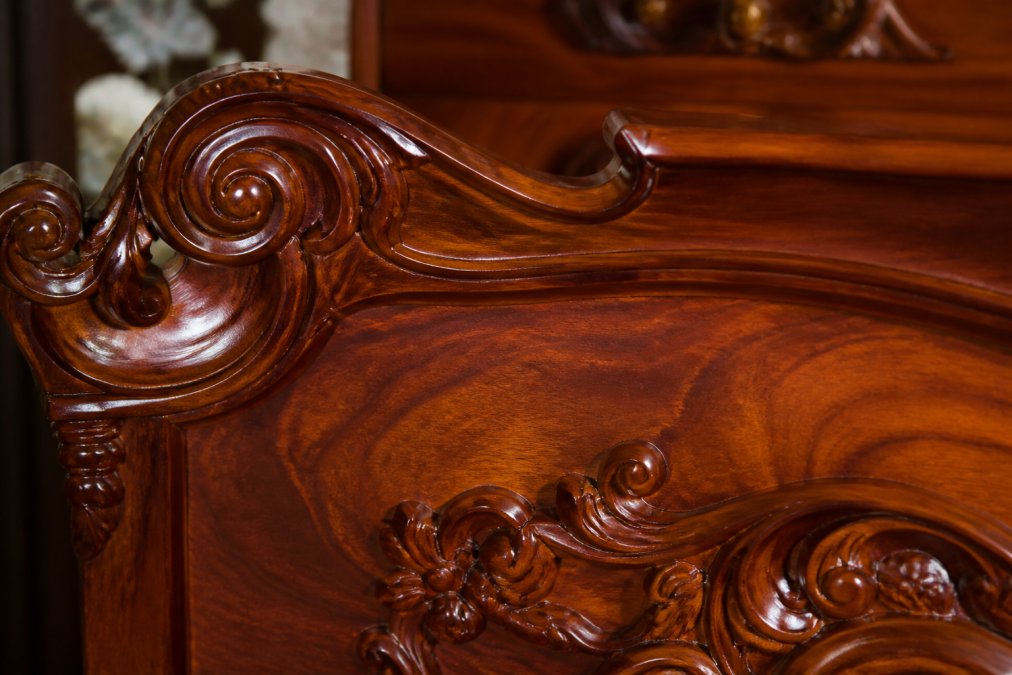
Mahogany wood is the classic material for authentic Baroque furniture. Its high density and strength make it ideal for fine carvings and complex shapes. Over time, mahogany develops an attractive patina – a deep, warm coloration that gives the furniture additional character. The grain is fine and even, meaning carvings can be executed precisely without the wood splintering or cracking.
Another advantage: Mahogany is naturally resistant to rot and insects (peer-reviewed research). This explains why historical mahogany Baroque furniture is still preserved in museums and palaces today. For modern reproductions and luxury furniture, mahogany remains the first choice.
Rosewood and ebony are other precious hardwoods used in high-end Baroque furniture. Ebony is extremely dense and dark – almost black – and is often used for details, inlays, and applications. Rosewood offers a reddish-brown coloration and is also highly durable. These woods are rarer and more expensive, but give the furniture an unmistakable exclusivity.
Beechwood and Framing Woods
Beechwood is a European hardwood with exceptional strength and flexibility. It is frequently used for the internal frames of Baroque armchairs and sofas – areas that are not visible but must provide maximum stability. Beech is easy to stain and can thus take on the appearance of more precious woods.
The great advantage of beechwood lies in its price-performance ratio. A Baroque chair with a beechwood frame and mahogany applications combines stability with cost-efficiency – without compromising on quality. Beechwood is also flexible enough to create the curved shapes that define Baroque furniture.
Walnut is another popular choice for Baroque furniture. It offers a warm, chocolate-brown coloration and is less hard than mahogany, yet still durable. Walnut is excellent for carving and takes surface finishes like shellac beautifully.
Luxury Upholstery Fabrics for Baroque Furniture: Velvet, Silk, and Leather
Upholstery is the face of a piece of Baroque furniture – it is the first thing the viewer sees and feels. This is where it is decided whether a piece of furniture looks luxurious or cheap. The best Baroque furniture combines high-quality fabrics with traditional upholstery techniques: spring core underconstruction, natural fibers, and artisanal craftsmanship.
Velvet Covers and Brocade Fabrics
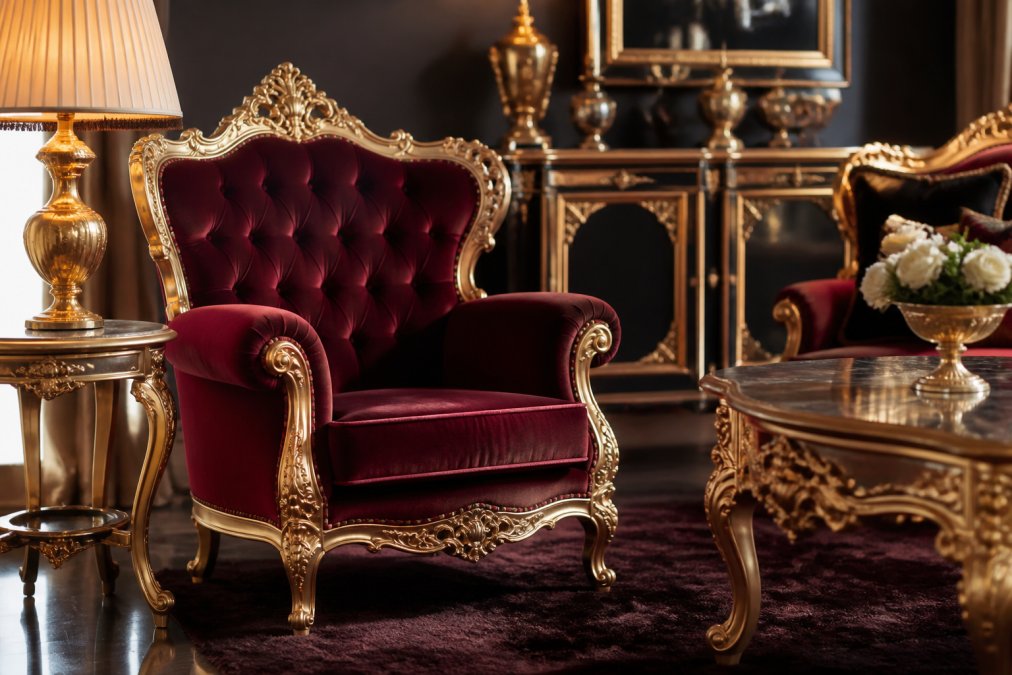
Velvet is the classic choice for Baroque furniture. Its soft, dense surface with a characteristic sheen immediately creates an impression of opulence. Genuine velvet is made from cotton, viscose, or silk and offers a tactile feel that modern synthetic fabrics cannot match.
The reason velvet is so popular: it reflects light in a way that suggests depth and movement. A velvet armchair in burgundy or dark blue immediately looks noble and timeless. However, high-quality velvet fabrics are demanding to care for – they require regular brushing and professional cleaning.
Brocade is a woven fabric with integrated gold or silver threads. Historically, brocade was used for the most valuable Baroque furniture. Modern brocade combines silk or viscose with metallic fibers, creating a pattern that sparkles as the light changes. Brocade is less durable than velvet, but is a dramatic choice for decorative armchairs or accent pieces.
Genuine Leather and Silk Fabrics
Genuine leather is the more practical alternative to velvet – and often the better choice for hotel furniture or frequently used living rooms. High-quality leather develops a patina over time that increases rather than diminishes its value. It is easy to clean, hygienic, and extremely durable.
Aniline leather is often used for Baroque furniture – a leather that is dyed through with soluble dyes, preserving the natural grain of the animal hide. This leather looks more authentic and luxurious than surface-pigmented leather. The disadvantage: it is more sensitive to stains and requires regular care with specialized products.
Silk is a natural fabric with incomparable elegance. Genuine silk fabric for Baroque furniture is rare and expensive – it is mostly used for decorative armchairs, stools, or accent cushions. Silk has a subtle sheen and a luminosity that instantly elevates rooms. The disadvantage lies in its durability: silk is not suitable for heavily used furniture.
Ornaments, Inlays, and Surface Finishing
What distinguishes Baroque furniture from other styles is the details. Ornaments are not decoration – they are craftsmanship. Every carved element, every inlay, and every gilding requires hours of manual labor.
Gold Leaf, Gilding, and Shellac
Gold leaf is real gold in paper-thin layers. On high-quality Baroque furniture, gold leaf is applied – not as a spray paint, but in elaborate manual work. The result is a gilding that lasts for decades and becomes even more beautiful over time.
Shellac is a natural surface finish made from the secretions of the lac bug. It has been used for centuries to finish wooden furniture. Shellac offers a warm, natural sheen and allows the wood grain to shine through – unlike modern polyurethane varnishes, which create a plastic-like surface. A piece of Baroque furniture finished with shellac looks authentic and valuable.
The advantage of shellac: it can be repaired. Scratches or damage can be touched up by reapplying shellac without having to repaint the entire piece of furniture. Modern varnishes do not offer this flexibility.
Hand-Carved Elements and Veneer Work
Hand-carved elements are the heart of authentic Baroque furniture. Every carving is unique – proof of the artisanal quality. Professional carvers work with specialized tools and require years of training to master the characteristic Baroque motifs: acanthus leaves, shellwork (rocaille), volutes, and figural elements.
Veneer work – the application of thin layers of precious wood onto a substrate – makes it possible to use expensive woods efficiently and create complex patterns. High-quality veneer work uses solid wood substrates, not plywood. The joints between the veneer strips are barely visible, and the overall appearance is seamless.
Inlays – the insertion of different types of wood, ivory, tortoiseshell, or metals – are another art form. At Casa Padrino, inlays are still executed in traditional manual work, giving each piece of furniture a unique quality.
Fittings and Metallic Applications
Fittings are not just functional – they are a design element. High-quality Baroque furniture uses fittings made of bronze or brass, not cheap steel.
Bronze fittings develop a patina over time – a greenish or brownish discoloration that gives the furniture additional character. Brass has a warmer, golden tone and immediately looks luxurious. Both materials are durable and can be polished or cleaned if necessary.
The workmanship is crucial: on high-quality furniture, fittings are not glued, but screwed or riveted. They fit perfectly without wobbling. Cheap furniture can often be recognized by loose fittings or those that fail after a short time.
Baroque Furniture Care and Value Retention: Longevity Through Proper Treatment
A high-quality piece of Baroque furniture is an investment – and like any investment, it requires care. The good news: with simple measures, its value can be preserved for decades.
Wood care: Solid wood furniture should be dusted regularly with a lint-free cloth. Once a year, a treatment with high-quality wood oil or wood wax is recommended. This nourishes the wood, protects it from drying out, and enhances the natural patina.
Upholstery care: Velvet fabrics should be brushed regularly with a soft brush – always in one direction. Leather requires occasional care with specialized leather care products. Spilled liquids should be wiped up immediately.
Environmental factors: Baroque furniture does not like extreme temperatures or fluctuations in humidity. They should not be placed directly next to radiators or air conditioning units. Strong sunlight can fade fabrics – curtains are therefore useful.
Restoration: In case of damage, a specialist should be consulted. A professional restorer can repair scratches in the wood, fix veneers, or replace fabrics – without reducing the value of the furniture.
| Care Measure | Frequency | Benefit |
|---|---|---|
| Dusting with a lint-free cloth | Weekly | Prevents dirt build-up |
| Applying wood oil or wood wax | Once a year | Nourishes wood, enhances patina |
| Brushing velvet fabrics | Monthly | Preserves sheen and structure |
| Caring for leather | 2-3 times a year | Protects against cracks and drying out |
| Professional cleaning | As needed | Removes stubborn stains |
Quality Inspection: How to Recognize High-Quality Baroque Furniture
Before you invest in Baroque furniture, you should know what to look out for. Here are concrete criteria for quality inspection:
1. Wood Check: If possible, open a drawer or look at the back of the furniture. High-quality Baroque furniture uses solid wood throughout – even in non-visible areas. Plywood or MDF indicates inferior workmanship.
2. Check Carvings: Genuine hand-carving has small irregularities – this is a quality feature, not a defect. Carvings that are too perfect and smooth were likely machine-made. Feel the carvings with your fingers – they should feel natural, not plastic-like.
3. Test Upholstery: Press on the upholstery. It should feel firm, not soft or saggy. High-quality upholstery has a spring core – you will feel this when you press firmly. Cheap furniture uses only foam.
4. Inspect Fittings: Pull on fittings and handles. They should sit absolutely firmly. Wobbling fittings are a sign of poor workmanship. Also check the material – genuine bronze or brass has a weight that plastic does not have.
5. Seams and Joints: All seams should be straight and even. Joints between veneer strips should be barely visible. Irregular seams or wide joints indicate hasty manual work.
6. Smell Test: A good piece of Baroque furniture smells of wood and possibly shellac – a natural, pleasant scent. Chemical or unpleasant odors indicate cheap materials or poor workmanship.
7. Weight: High-quality Baroque furniture is heavy. The solid wood and the spring core upholstery weigh more than cheap alternatives. If a piece of furniture is surprisingly light, it is likely inferior.
8. Origin and Certificates: Ask about the origin of the wood and fabrics. Reputable manufacturers can provide information about their materials. Certificates for sustainable forestry are a positive sign.
Conclusion: Investment in Timeless Elegance
The best materials for high-quality Baroque furniture are not the most expensive – they are the most authentic. Solid wood such as mahogany or walnut, fine upholstery fabrics like velvet or leather, artisanal finishing with shellac and gold leaf, bronze fittings, and hand-carved details: these materials are timeless because they work. They last, they age beautifully, and they can be repaired.
The German home furniture market is estimated at USD 20.82 billion in 2026 and is expected to reach a value of USD 24.16 billion by 2031 (mordorintelligence.com). Within this market, Baroque furniture occupies a growing place – not as a niche, but as a conscious design choice for everyone who values quality.
Investing in high-quality Baroque furniture is an investment in the future of your living space. With the right materials and proper care, your furniture will not only endure – it will become more beautiful.
If you are ready to discover high-quality Baroque furniture that meets these material standards, visit Casa Padrino and explore our exclusive collections. From hand-carved Baroque armchairs to custom-made luxury sofas – we offer furniture that not only looks beautiful but also lasts for generations. Our experts will be happy to advise you on the best materials for your project. Visit our Baroque furniture collection and discover pieces that combine timeless elegance with modern craftsmanship.
Frequently Asked Questions
Which materials are typical for high-quality Baroque furniture?
High-quality Baroque furniture consists of a combination of solid woods such as mahogany, walnut, and beech for the frames, fine upholstery fabrics like velvet and silk, genuine leather, as well as ornaments made of gold leaf, bronze, and brass. These materials are handcrafted and offer durability and timeless elegance. Casa Padrino uses these classic materials in combination with European craftsmanship for authentic Baroque furniture.
Why is solid wood so crucial for Baroque furniture?
Solid wood provides the structural integrity and durability required for the elaborate carvings and curved shapes of the Baroque style. Woods like mahogany develop an attractive patina over time and resist wear better than veneers or plywood. The density and strength allow for fine handcrafted details that make up the characteristic splendor and elegance of Baroque furniture.
How do you recognize the quality of materials in Baroque furniture?
Quality features include the use of continuous solid wood instead of veneers, uniform hand-carvings without scratches or irregularities, high-quality upholstery fabrics with densely woven fibers, genuine gold leaf or bronze fittings instead of plastic, and a professional surface finish with shellac or high-quality varnishes. Casa Padrino offers transparent insights into materials and processing techniques for each piece of furniture.
Which fabrics are best suited for the upholstery of Baroque furniture?
Velvet, silk, brocade, and genuine leather are the classic choices for Baroque furniture upholstery. Velvet offers luxury and softness, silk lends elegance and sheen, brocade allows for intricate patterns, and genuine leather offers durability and develops a noble patina. The choice depends on the intended location – private homes often prefer velvet, while hotel projects choose more robust leather.