Table of Contents
- Hotel Furniture Design Trends 2026: An Overview
- Organic Shapes and Sculptural Silhouettes as a Design Language
- Sustainable Hotel Furniture: Ecological Materials and Longevity
- Hotel Color Concepts 2026: Warmer Palettes and Soothing Tones
- Smart Hotel Room Amenities: Technology Integration and Wellness Design
- Personalization in Hotel Design: Intentional Spaces and Guest Experience
- Multifunctional Furniture and Flexible Space Concepts
- Dark Wood, Maximalism, and High-Quality Finishes
Hotel Furniture Design Trends 2026: Luxury Meets Sustainability
Last updated: July 22, 2026
The hospitality industry is undergoing a fundamental transformation. Today’s guests expect not only comfort, but also authenticity, sustainability, and intentionality in every space. The hotel furniture design trends for 2026 reflect this shift: moving away from uniform mass design toward individual, sustainable, and sensory-rich spaces that tell a story. This guide shows you which trends will define your property and how to implement them with high-quality, durable furniture.
Hotel Furniture Design Trends 2026: An Overview
The hotel furniture design trends for 2026 are a strategic statement about a hotel’s values. Sustainability, wellness orientation, technological integration, and conscious material selection define the year 2026. Hotels that authentically implement these trends create unforgettable experiences.
The trends can be divided into five core areas: organic shapes and sculptural silhouettes, sustainable materials with real long-term value, warmer and more soothing color palettes, smart technology integration for wellness and comfort, and intentional personalization. Each of these areas requires a thoughtful selection of furniture that not only looks trendy but also withstands the daily demands of hotel operations.
Casa Padrino has established itself over 20 years as a specialist in luxury furniture and understands the balance between design innovation and practical durability. The exclusive hotel furniture collections combine traditional European craftsmanship with contemporary design trends.
Organic Shapes and Sculptural Silhouettes as a Design Language
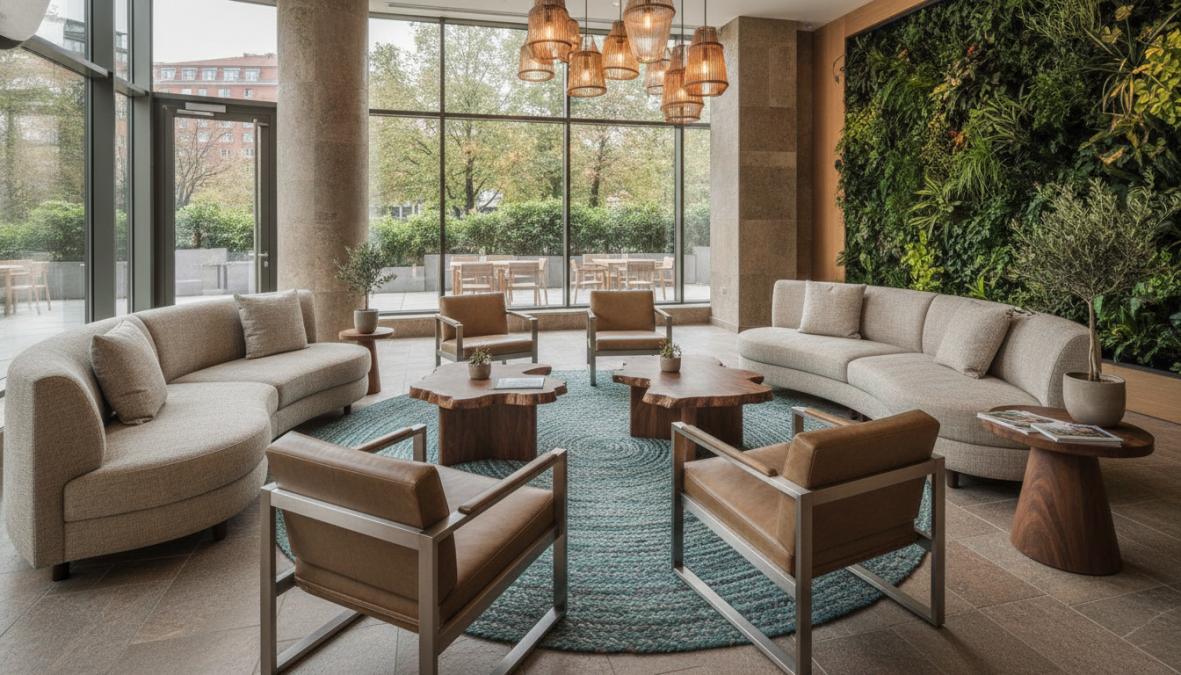
Sharp edges and geometric rigidity are out. The trend for 2026 is moving toward organic shapes, soft curves, and sculptural silhouettes that appear almost artistic. This design language creates intimacy and warmth – two qualities that guests unconsciously seek.
Organic shapes also influence physical well-being. An armchair with flowing, curved armrests invites guests to linger, while an angular chair unconsciously creates tension. Puffy shapes – soft, upholstered forms reminiscent of clouds – are a key element of this trend.
Casa Padrino offers high-quality finishes and robust materials that retain their elegant shape even under intensive use. Side tables with organic contours, armchairs with flowing silhouettes, and headboards with sculptural details define the new generation of luxury furniture for hotels.
A practical tip: Organic shapes look particularly elegant when combined with dark wood. The contrasts between the soft lines and the solid, dark wood structure create a visually captivating balance.
Choose organic shapes specifically for lounges and reading areas. An armchair with puffy shapes and a dark wood side table create a focal point, while the rest of the room can remain more structured. This strategy avoids visual chaos and focuses attention on high-quality statement furniture.
Sustainable Hotel Furniture: Ecological Materials and Longevity
Sustainability is no longer a marketing gimmick – it is an expectation. Guests expect their stay not to come at the expense of the environment. Sustainable hotel furniture is therefore not only an ethical statement but also makes economic sense. Furniture that lasts longer needs to be replaced less frequently.
The key lies in the choice of materials. Genuine solid wood from certified sources, natural upholstery fabrics, marble, and bronze age gracefully. A solid wood chair with handcrafted details can last 15-20 years, whereas a cheap plywood chair looks worn out after three years.
Casa Padrino works exclusively with materials that meet these long-term requirements. The luxury hotel furniture is crafted from European solid wood and finished with gold leaf and bronze – materials that are not only beautiful but also virtually timeless.
Material Selection and Finishes for Long-Term Quality
The right choice of materials is the difference between a hotel that needs renovation after five years and one that can stand for ten years without major interventions. Here are the materials dominating upscale hotels in 2026:
- Solid wood (oak, walnut, wenge): Dark wood looks luxurious, hides scratches better, and fits almost any design concept.
- Marble and natural stone: For tables and surfaces. Marble is easy to care for and instantly looks sophisticated.
- High-quality upholstery fabrics: Linen, wool, and cotton blends age better than cheap polyester.
- Gold leaf and bronze finishes: Accents that transform a piece of furniture from standard to a statement.
The finish is just as important as the material itself. Matte or satin-finish surfaces are more practical for hotel operations while still looking elegant.
Invest in materials, not mass. A room with five high-quality pieces of furniture looks more luxurious than a room with ten cheap pieces. Quality is the best marketing for a hotel.
Maintenance and Resilience in Daily Hotel Operations
Even the most beautiful furniture wears down – if it is not properly maintained. Wood furniture requires regular care with special oils or waxes. Upholstered furniture should be cleaned monthly and professionally refurbished annually. Marble needs special cleaners to avoid scratching.
Casa Padrino offers not only furniture but also advice on maintenance and long-term care. A dark wood headboard with gold leaf details can look like new for 20 years with the right products and routines. A common mistake: hotels use overly aggressive cleaning agents to save time. This significantly shortens the lifespan of the furniture.
Hotel Color Concepts 2026: Warmer Palettes and Soothing Tones
The color palettes of 2026 are a conscious counterpoint to the cool, minimalist gray tones of recent years. Warmer, earthy colors dominate: terracotta, ochre, warm gray, cream, taupe, and deep brown tones. These colors have a calming effect and create an atmosphere of slow living.
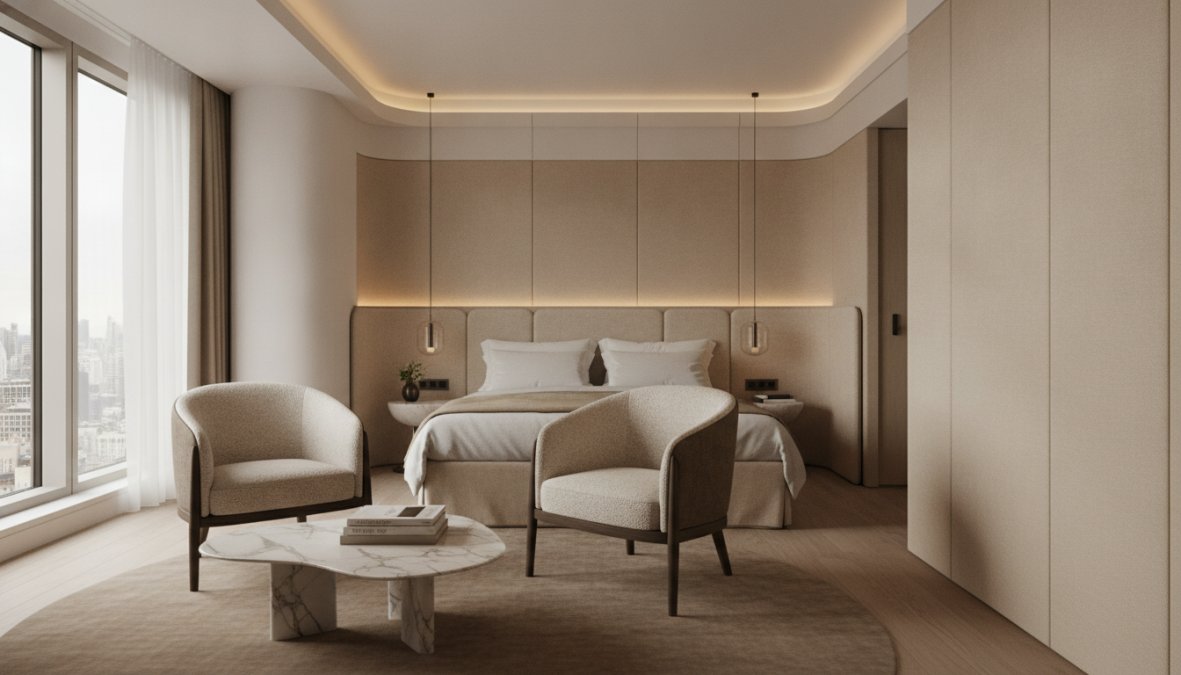
Warmer color palettes psychologically promote rest and relaxation – exactly what a hotel guest needs after a stressful day. A room in warm tones with organic furniture shapes and soft lighting is automatically perceived as more luxurious and comfortable.
The combination of warm colors with dark wood is standard in upscale hotels in 2026. A room with warm walls, dark wood furniture, and cream-colored upholstered furniture instantly looks sophisticated and timeless.
A practical note: Choose the room’s color palette BEFORE selecting the furniture. The furniture should blend into the colors, not the other way around.
Avoid too many different color shades in the same room. Choose a base color (e.g., warm gray), an accent color (e.g., terracotta), and a highlight color (e.g., gold or bronze). Too many colors look chaotic and cheap.
Smart Hotel Room Amenities: Technology Integration and Wellness Design
Technology integration in hotels is no longer optional in 2026 – it is expected. But it is not about visible gadgets everywhere in the room; rather, it is about smart, invisible integration that supports the guest without distracting them.
Smart lighting that adjusts to the time of day. USB ports in nightstands, invisibly integrated. Climate control that can be operated from the bed. This is the smart hotel room amenities of 2026.
Casa Padrino works with architects to integrate technology in a way that does not compromise the elegance of the space. Side tables with integrated charging stations, headboards with hidden lighting, and control panels that look like art objects – this is luxury interior design at its highest level.
Wellness-Oriented Hospitality Concepts
Wellness is no longer an add-on – it is the center of the hotel concept. Guests book hotels to rejuvenate. This means that every element of the room – from the lighting to the shape of the furniture – should contribute to the wellness experience.
Ergonomic armchairs that support the back. Lighting that respects circadian rhythms. Materials that feel natural. Casa Padrino offers bespoke furniture specifically developed for wellness concepts. An armchair is not just beautiful, but also ergonomically optimized.
Personalization in Hotel Design: Intentional Spaces and Guest Experience
Personalization in hotel design is no longer a luxury in 2026, but a necessity. Guests expect their room to feel personal to them, not like a standard hotel room.
This does not mean that every room has to be completely different. It means that spaces are designed with intention – that every element has a meaning. A room with a painting by a local artist, handcrafted furniture, and a story feels more personal than a room with generic furniture.
Hyper-localization is an important trend. Hotels in Munich should look different from hotels in Berlin. Casa Padrino works with hotels to create spaces that are not only luxurious but also convey a sense of place.
| Personalization Element | Implementation | Guest Experience |
|---|---|---|
| Local Artist Artworks | Regional works on the walls | Authentic sense of place |
| Bespoke Furniture | Custom-made armchairs and tables | Uniqueness and exclusivity |
| Handcrafted Details | Gold leaf, bronze finishes | Perception of quality and luxury |
| Local Materials | Wood from regional suppliers | Sustainability and connection |
| Personalized Lighting | Dimmable, warm lighting systems | Comfort and control |
Multifunctional Furniture and Flexible Space Concepts
Hotels must be flexible. A room might be used for a business meeting tomorrow, relaxation in the evening, and sleeping at night. Multifunctional furniture is therefore not only practical but also necessary.
But multifunctionality must not come at the expense of aesthetics. Casa Padrino specializes in bespoke furniture that combines multifunctionality with elegance. A side table with hidden storage. An armchair with an integrated table. A headboard that doubles as a shelf.
Flexible space concepts are also important for future-proofing. A hotel with flexible, modular furniture can adapt without a complete redesign.
Dark Wood, Maximalism, and High-Quality Finishes
Dark wood remains the undisputed king of luxury furniture in 2026. Wenge, dark oak, walnut – these wood species dominate in upscale hotels worldwide. Dark wood instantly looks luxurious, hides scratches better than light wood, and fits almost any color palette.
Maximalism is another trend for 2026. After years of minimalist minimalism, designers are returning to richer, more detailed spaces. This means that high-quality details and embellishments are appreciated once again. A headboard with intricate carvings. An armchair with multiple textures. A side table with bronze applications.
High-quality finishes are the differentiator between good and excellent design. Gold leaf, high-gloss polish, handcrafted carvings – these details require manual labor and expertise.
Dark wood with gold leaf details is particularly suitable for suites and deluxe rooms. For standard rooms, dark wood can be used with simpler finishes – the elegance remains, while costs are reduced.
Summary and Practical Application
The hotel furniture design trends for 2026 are not just aesthetic – they are strategic. Hotels that authentically implement these trends create spaces that feel luxurious, are sustainable, and enhance the guest experience. The combination of organic shapes, sustainable materials, warm colors, smart technology integration, and thoughtful personalization defines upscale hospitality in 2026.
The biggest challenge lies in not just ticking off these trends as a checklist, but integrating them into a coherent design concept that reflects the hotel’s identity. Casa Padrino offers solutions for every requirement – from Baroque furniture for classically elegant hotels to bespoke furniture for unique design concepts.
| Trend | Practical Implementation | Long-Term Benefit |
|---|---|---|
| Organic Shapes | Armchairs and side tables with flowing silhouettes | Visual elegance and comfort effect |
| Sustainable Materials | Solid wood, natural stone, high-quality upholstery fabrics | Longevity and guest trust |
| Warmer Color Palettes | Terracotta, ochre, warm gray as a base | Calming effect and wellness perception |
| Technology Integration | Invisible lighting and charging stations | Modern comfort without loss of aesthetics |
| Personalization | Local artworks and bespoke furniture | Authenticity and brand identity |
| Multifunctionality | Furniture with hidden storage | Flexibility and space efficiency |
| Dark Wood & Details | High-quality finishes with gold leaf | Timeless elegance and prestige |
Frequently Asked Questions about Hotel Furniture Design Trends 2026
Are the hotel furniture design trends for 2026 really that different from 2025?
The trends for 2026 are not a radical shift, but rather a deepening of existing movements. Organic shapes, sustainability, and a focus on wellness will become the standard in upscale hotels in 2026.
Can I implement the trends in existing hotels, or do I need a complete renovation?
Many trends can be implemented through strategic replacements. New armchairs, side tables, and headboards in the right shapes and colors can give a room a completely new feel without having to change walls or floors.
How important is sustainability really to guests?
Very important – but in a subtle way. Guests expect materials to be of high quality and long-lasting. Sustainability is a natural byproduct of quality.
Can I save budget if I don’t implement all the trends?
Yes. Prioritize based on guest contact: headboard, armchairs, side tables – these are the pieces of furniture the guest sees and uses daily. Less visible elements can be upgraded later.
The future of the hospitality industry is no longer a question of quantity or pure functionality – it is about quality, sustainability, and emotional connection. The hotel furniture design trends for 2026 show that guests are willing to pay for authenticity, craftsmanship, and thoughtful design.
If you want to furnish your hotel with furniture that embodies these trends while lasting for decades, Casa Padrino is your partner. With exclusive luxury furniture collections, bespoke furniture services, and over 20 years of experience in international hotel projects, Casa Padrino offers not just furniture – but a concept for luxury hotel furniture that delights guests and satisfies operators. Visit Casa Padrino today to realize your hotel concept with premium furniture that meets the trends of 2026 and remains timelessly elegant.
Frequently Asked Questions
What colors and materials are trending in hotel furniture for 2026?
The hotel furniture design trends for 2026 focus on warmer color palettes with soothing tones such as terracotta, sage green, and warm grays. Sustainable options dominate materials: solid wood in dark finishes, high-quality finishes with marble and bronze, and ecologically certified upholstery fabrics. Casa Padrino combines traditional European craftsmanship with modern sustainability standards for timeless elegance.
How do you integrate sustainability into sustainable hotel furniture without sacrificing quality?
Sustainable hotel furniture requires conscious material selection and long-term investment. Solid wood from certified sources, durable finishes, and modular designs allow for repairs and redesigns. Longevity is key: high-quality furniture lasts for decades and reduces replacement cycles. Casa Padrino uses proven craftsmanship techniques that combine robustness with aesthetics – ideal for professional hotel operations.
What role does technology play in smart hotel room amenities in 2026?
Smart hotel room amenities in 2026 seamlessly integrate technology into the design: intelligent lighting, networked climate control, and wireless charging systems in furniture. Wellness-oriented hospitality concepts combine comfort with control – guests manage their environment via app. However, the tactile experience remains central: furniture must remain elegant and subtly conceal technology rather than dominate.
How can personalization in hotel design improve the guest experience?
Personalization in hotel design creates intentional spaces that adapt to guest needs. Modular furniture allows for flexible layouts for various usage scenarios. Hotel color concepts for 2026 utilize psychologically effective palettes for relaxation. Individual adjustments – from lighting to furniture arrangement – measurably increase satisfaction and loyalty. Casa Padrino offers tailored solutions for unique guest experiences.