Table of Contents
- Modern Baroque Furniture vs. Antique: Fundamental Differences
- Features and Style Elements of Baroque Furniture
- Materials and Wood Types: Antique versus Modern
- Identifying Authenticity: How to Recognize Genuine Antiques
- Buying Baroque Furniture: Modern Reproductions and Their Advantages
- Baroque Interior Design: Integration into Modern Living Spaces
- Craftsmanship and Manufacture: What Makes the Difference
- Baroque Furniture as an Investment: Long-Term Appreciation
Last updated: August 14, 2026
Modern Baroque Furniture vs. Antique: The Comparison
The fascination with the Baroque style has endured for centuries – but today, lovers of this opulent aesthetic face a fundamental decision: genuine antiques or modern Baroque furniture? Both options have their merits, but their differences are significant. Casa Padrino, a renowned manufacturer of exclusive luxury furniture, has studied this topic intensively and offers solutions that combine both worlds. In this guide, we will show you the key differences and how to make the right choice.
Modern Baroque Furniture vs. Antique: Fundamental Differences
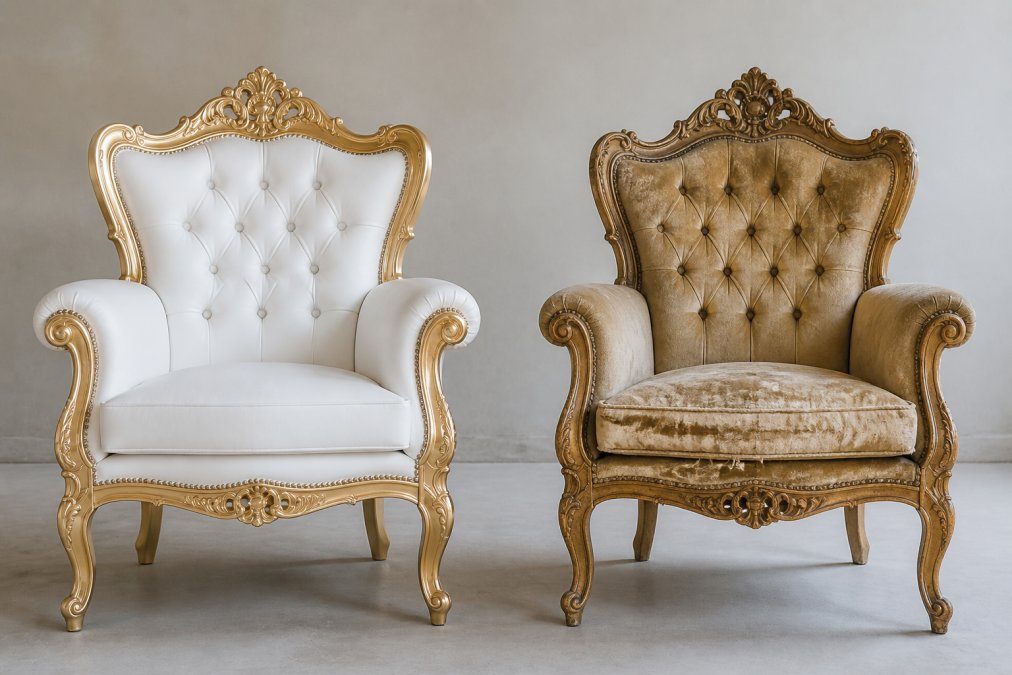
Modern Baroque furniture vs. antique differ fundamentally in their origin and manufacture. Genuine antiques date back to the 17th and 18th centuries and carry the patina of their history – scratches, discoloration, and signs of wear that bear witness to decades of use. Modern reproductions are deliberately given such antique traces, but these are calculated and controlled. Casa Padrino relies on transparent craftsmanship: each piece of furniture is manufactured with visible quality features that demonstrate genuine workmanship.
Another key difference lies in availability. Genuine antiques are unique pieces, often with defects and in need of restoration. Anyone wishing to furnish several rooms in the Baroque style will face major challenges with genuine antiques – consistency in style, color tone, and quality is almost impossible. Modern Baroque furniture enables coherent room concepts in which armchairs, chests of drawers, and tables harmonize perfectly.
Conclusion: Antiques are historical originals with an unmistakable patina; modern Baroque furniture pieces are contemporary interpretations that combine style and practicality.
Features and Style Elements of Baroque Furniture
Typical Embellishments and Ornaments
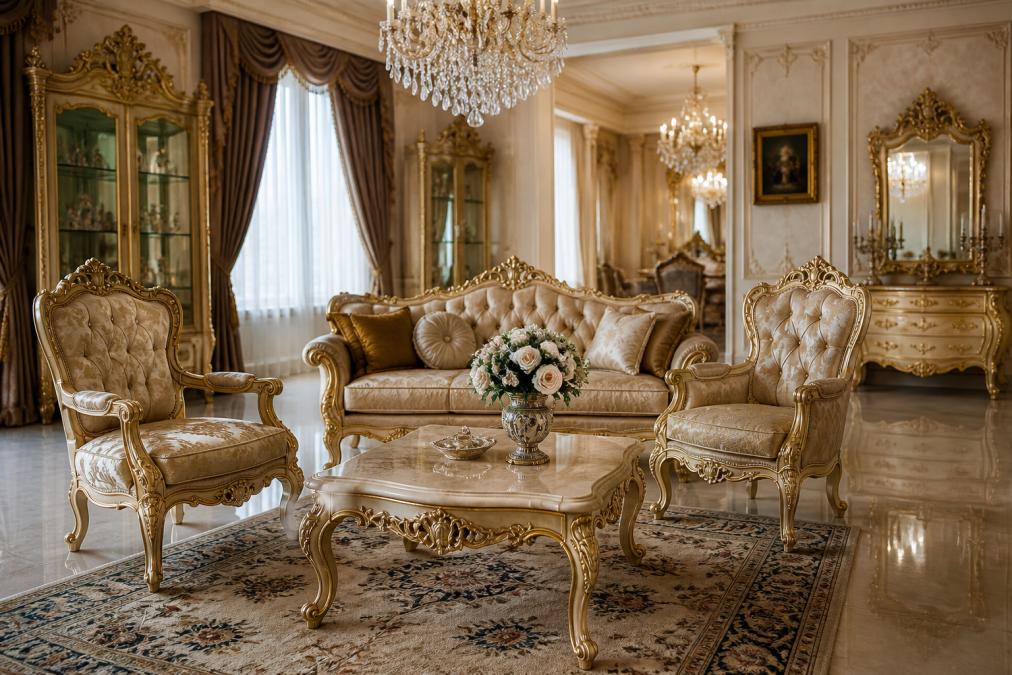
The Baroque style is defined by lavish embellishments and ornaments. Carvings, inlays, and relief patterns shape its appearance. In genuine antiques, these are often asymmetrical and show natural variations in depth. Modern Baroque furniture can be more precise without losing any of its elegance.
Typical ornaments include acanthus leaves, shellwork (rocailles), volutes, and curved tendrils. Gold and silver finishes are frequently used to emphasize the splendor. Casa Padrino works with high-quality materials such as gold leaf and bronze to implement these details authentically – not as a superficial treatment, but as genuine craftsmanship.
Curved Shapes and Splendor
Curved shapes are the hallmark of the Baroque style. Nothing is straight – everything flows and twists. These dynamic lines require craftsmanship, especially when processing solid wood. Walnut, mahogany, and rosewood were the preferred types of wood and are still used today for high-quality reproductions.
The splendor of the Baroque is expressed in the richness of its forms. Baroque furniture is often larger and has a greater presence than contemporary furniture. A Baroque armchair is not just a seat – it is a statement. Modern Baroque furniture preserves this character while simultaneously taking ergonomic standards into account.
Materials and Wood Types: Antique versus Modern
Genuine antiques were crafted from walnut, mahogany, rosewood, and oak. These woods are dense, durable, and develop a characteristic patina over time. Genuine velvet, brocade, and leather were standard – today often precious and difficult to source.
Modern Baroque furniture has access to a wider range of materials. They can use genuine solid woods, but also high-quality veneers, which increases stability. Upholstery materials are more diverse: alongside genuine velvet, there are high-performance synthetic fibers that combine elegance with practical care.
An important aspect is sustainability. Genuine antiques are already in circulation and do not require new resources. Modern Baroque furniture can also be sustainable if the manufacturer focuses on responsible forestry and durable construction. Casa Padrino sources materials consciously and ensures that each piece of furniture lasts for decades – an approach that implements sustainability through longevity.
Caution when buying antiques: woodworms, moisture damage, and structural weaknesses are common. Restoration can be more expensive than the original purchase price.
Identifying Authenticity: How to Recognize Genuine Antiques
Anyone interested in genuine antiques must learn how to recognize authenticity:
- Patina and signs of wear: Genuine antiques show natural wear. Scratches are irregular, and color tones vary depending on exposure.
- Construction methods: Old nails, hand-cut mortise and tenon joints, and primitive connections are signs of age. Modern Baroque furniture uses more precise methods.
- Wood characteristics: Old woods have characteristic cracks and warping. The wood is often darker and denser.
- Signature and documentation: Reputable antique dealers offer provenance and certificates of authenticity.
- Weight and feel: Genuine solid wood furniture made of mahogany or walnut is heavy.
Authenticating genuine antiques requires expertise and experience. With modern Baroque furniture, the authenticity of the craftsmanship is more important than age – Casa Padrino documents its manufacturing processes transparently so that buyers can understand the quality.
Buying Baroque Furniture: Modern Reproductions and Their Advantages
Consistency and Room Harmony
Anyone wishing to buy Baroque furniture for an entire room can ensure that everything harmonizes perfectly with modern reproductions. Color tones, style elements, wood types, and surface finishes are coordinated. For example: you are planning a bedroom with a bed, two nightstands, a chest of drawers, and a wardrobe. With genuine antiques, you would have to source these pieces individually – the probability of finding all of them in the same wood type with a similar patina is minimal. With modern Baroque furniture from Casa Padrino, you can choose all pieces from a single collection that are perfectly coordinated.
Availability and Predictability
Genuine antiques are a matter of luck – you might never find the right piece, or it could take years. Modern Baroque furniture is predictable. Casa Padrino offers an extensive collection of Baroque furniture, from chests of drawers and armchairs to beds, all of which are coordinated. You can measure your space, define your color specifications, and realize a complete interior within weeks.
Condition and Immediate Use
Modern Baroque furniture arrives new and in perfect condition. No hidden damage, no woodworms, no moisture stains. Genuine antiques often require intensive restoration. An antique Baroque armchair may be visually appealing, but the upholstery is often worn out and the wooden frame may have cracks. A modern Baroque armchair from Casa Padrino is ready for immediate use, ergonomically optimized, and offers excellent value for money compared to the potential restoration costs of an antique piece.
Configurability and Customization
Modern Baroque furniture can be customized to meet customer requirements. Size, color, upholstery, wood type – everything is configurable. Casa Padrino offers custom-made designs that fit perfectly into your room geometry. For example: your living room has an unusual layout with a niche next to the window. With modern reproductions, you can adjust the depth, width, and seat height so that the piece of furniture fits perfectly.
Comparison Table: Antique vs. Modern
| Criterion | Genuine Antique | Modern Baroque Furniture |
|---|---|---|
| Availability | Unique pieces, hard to find | Wide selection, fast delivery |
| Consistency | Variable, patina differs | Uniform, coordinated |
| Condition upon Arrival | Often in need of restoration | New, ready for use |
| Ergonomics | Historical, often uncomfortable | Modernly optimized |
| Configurability | None, piece is fixed | Size, color, material customizable |
| Care | Intensive, specialized | Standard, easier |
| Room Harmony | Difficult with multiple pieces | Easy, everything matches |
Practical Decision Guide
Choose genuine antiques if:
- You are looking for a single, rare piece as an eye-catcher
- You are willing to budget for restoration costs
- Historical authenticity is more important to you than practical usability
Choose modern Baroque furniture if:
- You want to furnish several rooms or an entire space
- You value consistency and harmony
- You use the furniture daily and expect comfort
- You need a fast, reliable solution
Tip: When buying modern Baroque furniture, pay attention to the quality of workmanship: are the carvings handmade or pressed? Is genuine solid wood or veneer used? Casa Padrino documents its manufacturing processes transparently so that you can trace the quality.
Baroque Interior Design: Integration into Modern Living Spaces
Ergonomics and Seating Comfort: Historical vs. Modern
An often overlooked aspect is ergonomics. Historical Baroque furniture was designed for a different posture and different usage scenarios. An antique Baroque armchair was often more of a status symbol than a comfort object – people sat upright, seating time was limited, and the upholstery was minimal.
Modern Baroque furniture combines the aesthetic language of the Baroque with ergonomic standards. A modern Baroque armchair from Casa Padrino has an optimized seat height (42-46 cm), a slightly reclined backrest for lumbar support, sufficient seat depth (55-65 cm), and high-quality upholstery (8-12 cm). An antique Baroque armchair can be visually beautiful, but after 30 minutes of sitting, you will feel discomfort. A modern Baroque armchair allows for hours of use without discomfort.
Functionality in Modern Everyday Life
Historical Baroque furniture was often not designed for modern requirements. An antique Baroque desk may not have cable routing or height adjustability. An antique Baroque bed might not fit modern mattress sizes.
Modern Baroque furniture from Casa Padrino is functional for today’s everyday life: Baroque desks have integrated cable channels and ergonomic heights, Baroque beds fit standard mattress sizes, Baroque chests of drawers feature soft-closing drawers with full extension, and Baroque shelving units have reinforced shelves for modern loads.
Room Integration and Style Mixing
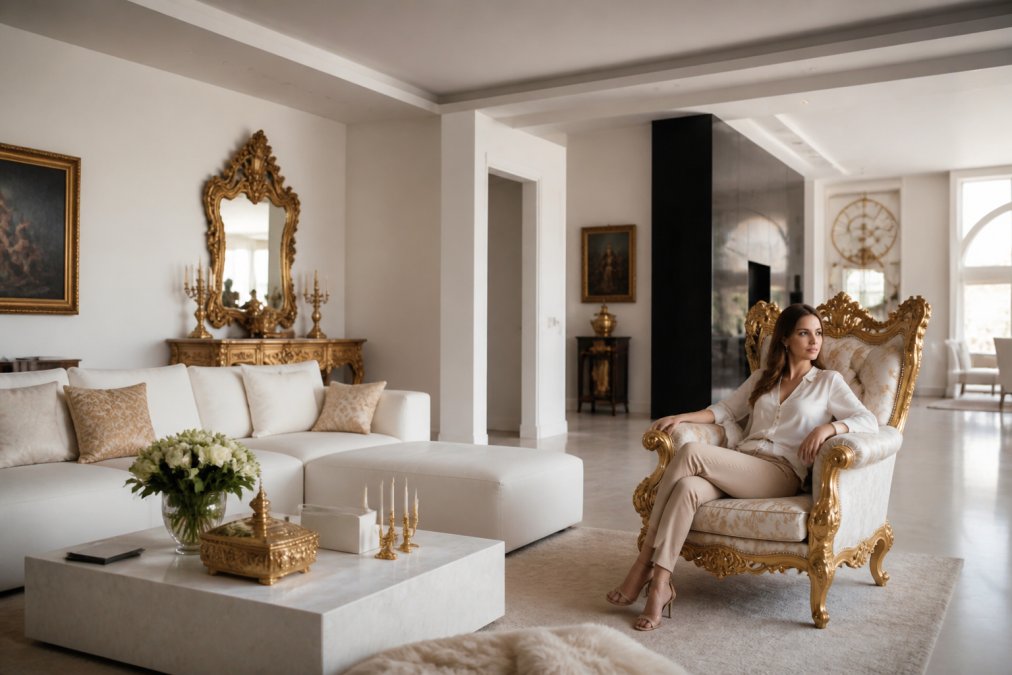
A common problem with genuine antiques: they can look isolated in a modern room. A single antique Baroque armchair in an otherwise minimalist living room can look out of place.
Modern Baroque furniture is designed for mixing styles. You can place a modern Baroque armchair next to a contemporary sofa, combine it with minimalist side tables, and pair it with modern lighting – the result is coherent and vibrant.
Casa Padrino offers interior design consulting to intelligently integrate Baroque furniture into modern interiors. The goal is not to transform the entire room into Baroque, but to set accents that exude elegance.
Care and Value Retention over Decades
Both genuine antiques and modern Baroque furniture require careful maintenance. Genuine antiques are often fragile and require specialized treatment. Modern Baroque furniture is built more robustly and designed for long-term use.
Care includes: regular dusting of wood surfaces with a soft cloth, monthly polishing with high-quality wood care products, avoiding direct sunlight, regular vacuuming of upholstered furniture, careful dusting of carvings with a soft brush, and maintaining a constant temperature (18-22 °C) and humidity (45-55%). Casa Padrino offers high-quality Baroque furniture that, with proper care, retains its value over decades.
Caution when buying antiques: woodworms, moisture damage, and structural weaknesses are common. Restoration can be more expensive than the original purchase price. Modern Baroque furniture does not carry these risks.
Craftsmanship and Manufacture: What Makes the Difference
The difference between cheap mass-produced goods and genuine Baroque furniture lies in the craftsmanship. Genuine antiques were the products of craftsmen who perfected their techniques over years. Each piece of furniture was unique, created through manual labor.
Modern, high-quality Baroque furniture combines traditional craftsmanship with modern techniques. Casa Padrino works with experienced craftsmen who master classical techniques – carving, inlay work, upholstery – and use modern precision tools to ensure consistency and quality.
A piece of furniture crafted by one person from start to finish differs fundamentally from one assembled at various stations. Genuine Baroque furniture from Casa Padrino undergoes multiple quality control stages and is manufactured by experts who understand the stylistic character. Small variations in the wood grain and slight differences in the carving are signs of genuine handwork.
Baroque Furniture as an Investment: Long-Term Appreciation
Is buying Baroque furniture an investment? The answer is nuanced.
Genuine antiques can appreciate in value, especially if they are rare, in good condition, and come from well-known craftsmen. However, the antique market is unpredictable, and not every old piece of furniture becomes valuable.
Modern Baroque furniture of high quality retains its value differently. They do not depreciate like mass-produced goods because their quality and craftsmanship are timeless. A modern Baroque armchair from Casa Padrino, handcrafted from solid wood and genuine velvet, will still be highly sought after in 20 years – not as an antique, but as a work of art.
The psychological value is also important. A piece of furniture that you use daily and that makes your room more beautiful has an intangible value that goes beyond monetary worth. Baroque furniture pieces are statements – they show taste, culture, and prosperity.
The decision between modern Baroque furniture vs. antique is ultimately a question of your priorities. Are you looking for historical authenticity and willing to pay for rarity and age? Then genuine antiques are the way to go. Do you desire elegance, consistency, and practical usability? Then modern Baroque furniture is the smarter choice.
Casa Padrino combines the best of both worlds: furniture that preserves the spirit of the Baroque era but is manufactured with modern craftsmanship, high-quality materials, and thoughtful design. Whether you are looking for a single piece of furniture as an eye-catcher or planning a complete Baroque interior – discover the collection from Casa Padrino, the leading manufacturer of luxury furniture in the Baroque style, and let professionals who understand your vision advise you.
Visit casa-padrino.de and explore our extensive collection of handcrafted Baroque furniture in luxury quality. From classic chests of drawers to opulent armchairs and majestic beds – each piece is a masterpiece of craftsmanship. Let our team support you in designing your personal Baroque ambiance and discover how genuine quality and timeless design can transform your living space.
Frequently Asked Questions
How do I recognize if Baroque furniture is truly antique?
Genuine antiques show natural signs of wear, patina, and unmistakable craftsmanship. Look for artisanal details such as inlays, carvings, and reliefs that cannot be precisely reproduced by machine. Wood growth, color variations, and historical fastening methods provide clues. Modern reproductions appear more uniform and feature deliberately imitated antique traces that look too regular. Experts can confirm authenticity through wood analysis and stylistic historical classification.
What advantages do modern Baroque furniture pieces offer in interior design?
Modern Baroque furniture combines the elegance of classic style elements with contemporary functionality and ergonomics. They are more cost-effective than genuine antiques, easier to maintain, and offer greater design variability. Manufacturers like Casa Padrino use high-quality materials such as solid wood, marble, and gold leaf to create the luxury of authentic pieces. They make it possible to flexibly integrate Baroque interior design into modern living spaces without completely sacrificing authenticity.
Are antique Baroque furniture pieces a good investment?
Yes, high-quality antique Baroque furniture is considered a solid investment. Authentic pieces made from precious wood types such as mahogany, rosewood, or walnut increase in value, especially if they are in good condition and come from well-known manufacturers. Their rarity and craftsmanship make them highly sought after. However, this requires thorough research to identify genuine quality. Modern reproductions do not develop a comparable appreciation in value, but they offer immediate aesthetic enjoyment without speculative risk.
Can I combine modern Baroque furniture with contemporary design?
Absolutely. Modern Baroque furniture is excellent for contemporary interiors when used selectively as statement pieces. A single Baroque armchair or a chest of drawers with a gold finish can create elegance and character in a minimalist living room. Casa Padrino offers modern interpretations such as dining tables with glass tops and stainless steel legs, which combine Baroque design language with current materials. The key lies in restraint: use Baroque as an accent, not as an overall concept, to avoid overloading the space.
How does the quality of modern Baroque furniture differ from antique pieces?
Antique Baroque furniture convinces through the craftsmanship of its era, rare wood types, and proven durability over decades. Modern high-quality reproductions use currently available techniques and materials to create authenticity. Casa Padrino, for example, combines traditional craftsmanship techniques with modern standards for durability and comfort. The difference lies less in quality than in historical authenticity and value appreciation. Both can convince in terms of durability and aesthetics if the manufacturer is reputable.