Table of Contents
- Calculating Hotel Interior Design Costs: Fundamentals of Investment Planning
- Hotel Room Furnishing Costs: Step-by-Step Calculation
- Hotel Renovation Budget Planning: First Steps in Cost Analysis
- Hotel Furniture Prices and Hotel FF&E Costs: Quality and Cost-Effectiveness
- The Sustainability Cost Factor and Supply Chain Risk Management
- Tax Depreciation (AfA) in Hotel Furnishing Calculations
- Avoiding Common Mistakes in Cost Calculation
- Hotel Furnishing with Casa Padrino: Luxury Furniture for High Standards
Last updated: July 20, 2026
Hotel Interior Design Costs: Calculation Guide
Hoteliers and investors regularly face a critical question: How can you realistically and reliably calculate hotel interior design costs? The answer is more complex than a simple rule of thumb, as costs depend on numerous factors—from the hotel category and quality standards to regional differences. At Demotex GmbH, we have been supporting hoteliers for over 20 years in precise cost planning for luxury hotel interiors, and we have learned that a structured calculation makes the difference between a blown budget and solid investment planning.
This guide shows you how to systematically approach calculating hotel costs—from distinguishing between fixed and variable costs and budgeting by hotel category to strategic depreciation models that optimize your financial planning.
Calculating Hotel Interior Design Costs: Fundamentals of Investment Planning
Investment planning for hotel interiors requires a deep understanding of the two types of costs that shape every hotel project. Fixed costs arise independently of room occupancy and remain constant over a longer period, while variable costs are directly linked to the use and wear and tear of the furnishings.
An average 4-star hotel with 100 rooms requires initial furnishing, the total budget for which depends heavily on the chosen quality class. The hotel category determines not only the furniture quality and choice of materials, but also guest expectations and ultimately the room rates you can charge.
Many hoteliers forget that initial furnishing is only the beginning. Allocate funds for replacement investments right from the initial calculation—on average 10-15% of the initial furnishing budget per year for renovations and wear-and-tear parts.
Understanding Fixed vs. Variable Costs
Fixed costs in hotel furnishing include furniture, lighting systems, flooring, and structural interior elements that remain in place for years. These costs are incurred as one-offs or at longer intervals and are typically distributed over depreciation models (AfA—depreciation for wear and tear).
Variable costs arise from maintenance, repairs, and the replacement of wear-and-tear parts. A damaged chair, replaced bed linen, or a repaired fixture are typical variable costs that change with occupancy and guest frequency. A hotel with 80% occupancy has different maintenance costs than one with 50% occupancy.
Separating these two types of costs is crucial for room rate calculation. Your room rates must not only cover variable operating costs but also offer sufficient margin for the amortization of fixed costs.
Hotel Category as a Cost Factor
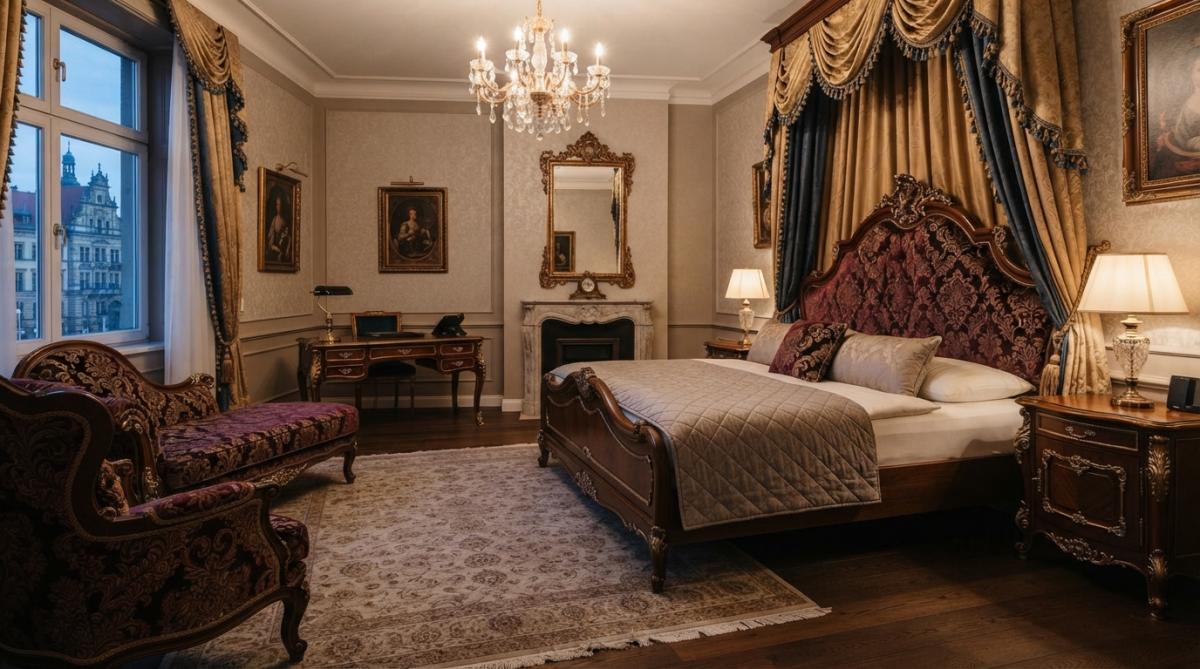
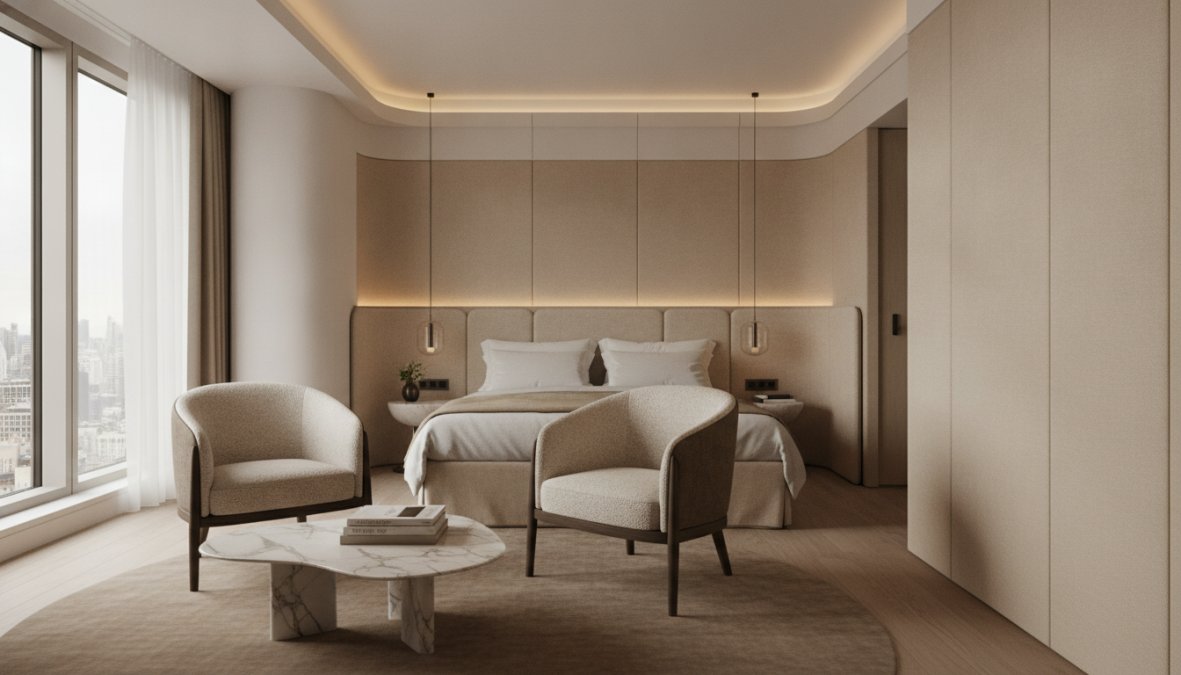
The hotel category—whether a 3-star, 4-star, or 5-star hotel—is the main driver of the total interior design costs. A budget hotel requires functional, durable furniture with a minimalist design, while a 5-star hotel requires exclusive, high-quality handcrafted pieces that convey a sense of luxury and exclusivity to guests.
When renovating or initially furnishing an upscale hotel, you must consider not only furniture but also lighting concepts, color schemes, and room acoustics. Casa Padrino specializes precisely in these requirements, offering hoteliers an extensive collection of luxury hotel furniture in Baroque, Rococo, and Neoclassical styles that meet the standards of international grand hotels.
Hotel Room Furnishing Costs: Step-by-Step Calculation
A precise calculation of hotel room furnishings begins with a detailed list of all elements. Every room requires a bed, nightstands, desk, chairs, wardrobe, bathroom fixtures, and lighting. Multiply this list by the number of your rooms, taking into account different levels of furnishing for various room categories (Standard, Superior, Suite).
Most hoteliers underestimate the costs of public areas. The lobby, restaurant, bar, and conference rooms can account for 20-30% of the total furnishing budget—often more than the rooms themselves.
Room Rate Calculation by Level of Furnishing
Room rate calculation is directly linked to the level of furnishing. A room with high-quality Baroque-style furniture, marble washbasins, and exclusive accessories justifies significantly higher room rates than a functional standard room.
Many hoteliers use the following rule of thumb: daily room rates should be around 1-2% of the total investment budget per room. So if you invest 50,000 euros per room, you should calculate with daily rates of 500-1,000 euros to amortize the investment within a reasonable timeframe.
Room occupancy is a critical factor. With an average occupancy of 70%, your rates must be higher than at 85% occupancy to achieve the same contribution margin. Also consider seasonal fluctuations: holiday regions have different occupancy patterns than business hotels.
Budgeting Public Areas and Ancillary Rooms
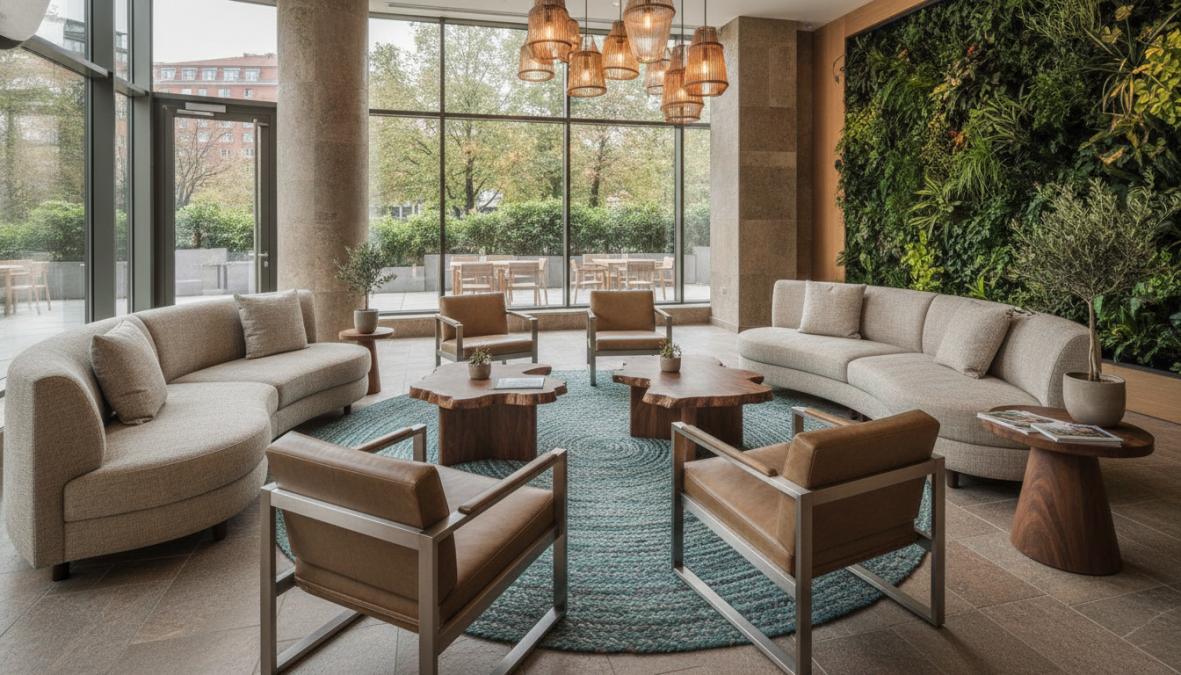
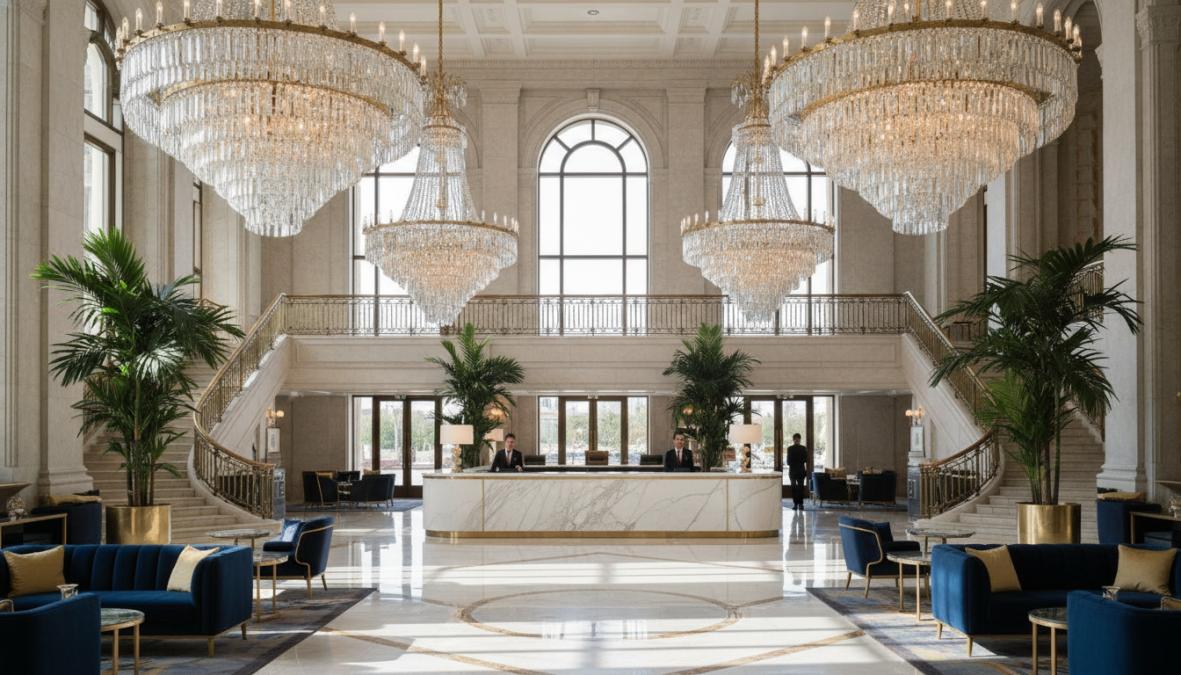
The hotel lobby is often the first thing guests see—and it leaves a lasting impression of the entire hotel. An elegant lobby with high-quality furniture, art objects, and sophisticated lighting signals quality and exclusivity.
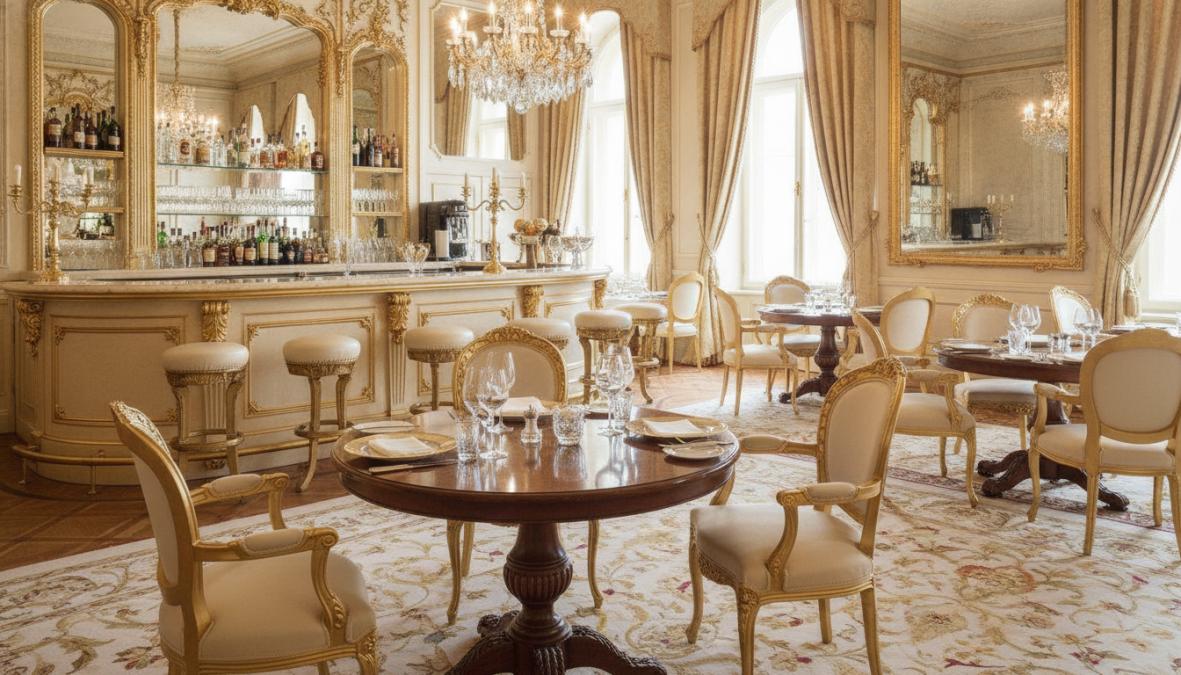
Public areas require a different cost logic than rooms. They are used more intensively, must be more robust, and should convey a consistent design statement. The restaurant, bar, conference rooms, wellness areas, and corridors need special attention when budgeting.
A structured breakdown for public areas could look like this:
| Area | Priority | Estimated Cost Share |
|---|---|---|
| Lobby & Reception | High | 15-20% |
| Restaurant & Bar | High | 12-18% |
| Conference Rooms | Medium | 8-12% |
| Wellness & Spa | Variable | 5-15% |
| Corridors & Ancillary Rooms | Medium | 8-10% |
| Rooms (total) | High | 40-50% |
Hotel Renovation Budget Planning: First Steps in Cost Analysis
A hotel renovation differs fundamentally from initial furnishing. During a renovation, you work with existing structures, must minimize business interruptions, and often cannot take all rooms out of service at the same time.
The cost analysis for a renovation begins with an honest inventory: Which furniture and furnishing elements are still functional and aesthetically acceptable? Which urgently need to be replaced? Are there design elements that should be modernized or updated?
Initial Furnishing vs. Replacement Investment
Initial furnishing is a one-off investment that equips the entire hotel or new rooms. Replacement investment, on the other hand, is a regular task—typically, you have to expect a comprehensive renovation every 7-10 years, depending on the intensity of use and material quality.
The distinction is crucial for financial planning. Initial furnishings are often financed through loans, while replacement investments should be paid for from ongoing operating resources or reserves. For example, a 100-room hotel could renovate 10-15 rooms annually to continuously maintain a fresh standard without jeopardizing operations.
When planning replacement investments, you should think in terms of wear-and-tear groups: mattresses and bed linen have a shorter lifespan than furniture, and furniture has a shorter lifespan than flooring. Staggered replacement planning prevents you from suddenly being confronted with enormous costs.
Many hoteliers delay renovations for too long to save costs. The result: guests book elsewhere, room rates drop, and the hotel loses competitiveness. Regular, planned renovation is cheaper than an emergency complete overhaul.
Renovation Costs for Public Areas
Public areas age visually faster than rooms because they are used more intensively. A lobby that was elegant 5 years ago can look outdated today. Restaurants and bars are also subject to stronger design trends than rooms.
Renovation costs for public areas are often higher per square meter than for rooms because higher quality standards and more specialized craftsmanship are required here. A restaurant redesign could include new flooring, wall design, lighting concepts, and of course, new furniture and decoration.
Plan for longer renovation cycles for public areas—typically a complete renovation every 8-12 years, with minor updates every 3-4 years. This keeps the areas modern and appealing without affecting operations.
Hotel Furniture Prices and Hotel FF&E Costs: Quality and Cost-Effectiveness
FF&E stands for “Furniture, Fixtures & Equipment”—the category under which most hotel furnishing costs fall. FF&E costs are directly linked to the quality and durability of the furniture. A cheap bed lasts 3-4 years, a high-quality bed lasts 10+ years.
Calculating the true cost per year requires you to divide the purchase cost by the expected lifespan. A hotel bed that costs 5,000 euros and lasts 10 years costs you 500 euros per year—significantly cheaper than a cheap bed for 1,500 euros that needs to be replaced after 4 years (375 euros per year, plus replacement costs and business interruption).
Modularity vs. Custom Manufacturing: Cost-Effective Solutions
Modular furniture offers flexibility and often lower purchase costs. You can combine and adapt modules and replace individual components if necessary. This makes modular systems particularly economical for hotels that want to update their furnishings regularly.
Custom manufacturing, on the other hand, allows you to make optimal use of spaces and create a consistent, distinctive design. If your hotel has a special design concept—for example, Baroque-style elegance with modern accents—custom manufacturing is often the better choice, even if the initial costs are higher.
Casa Padrino offers both options: modular collections for quick, standardized solutions and extensive custom manufacturing options for hotels with specific design requirements. The combination of traditional European craftsmanship with timeless design makes it possible to create spaces that are not only economical but also look elegant years later.
Hotel FF&E Costs: Correctly Evaluating Furniture, Fixtures & Equipment
Evaluating FF&E costs requires you to think beyond the purchase price. Consider:
- Supply Chain Reliability: Can you get replacement parts if something is damaged?
- Maintenance Costs: How expensive is it to clean and repair the furniture?
- Aesthetic Durability: Does the furniture still look modern and high-quality after 5 years?
- Hospitality Compatibility: Does the furniture fit your concept and target group?
A high-priced designer piece that is difficult to repair and goes out of style in 3 years is economically unviable. A timeless, high-quality piece of furniture that can be repaired if necessary and still looks elegant after 10 years is a better investment.
The Sustainability Cost Factor and Supply Chain Risk Management
Sustainability is no longer just a cost factor—it is a strategic differentiator. Guests are increasingly paying attention to whether a hotel operates sustainably. Furniture made from sustainable materials, long-lasting quality, and responsible manufacturing can make your hotel more attractive to environmentally conscious guests.
Sustainable furniture often costs more initially but lasts longer and reduces your replacement costs over the years. A wooden armchair made of certified solid wood with handcrafted finishes costs more than a cheap armchair made of plywood and plastic—but after 5 years, it is still a gem, while the cheap armchair had to be replaced long ago.
Supply chain risk management is an often overlooked aspect of hotel furnishing planning. If your furniture supplier suddenly goes bankrupt or supply bottlenecks arise, you can quickly find yourself in trouble. Working with established, reliable suppliers like Casa Padrino, who have over 20 years of experience in international hotel projects, significantly reduces this risk.
Diversify your suppliers, but work with at least one strategic partner you trust. A reliable partner can quickly deliver replacement parts in emergencies or offer short-term solutions.
Tax Depreciation (AfA) in Hotel Furnishing Calculations
Depreciation for wear and tear (AfA) is an important factor in cost planning. Furniture and furnishings can be depreciated over their useful life—typically over 10-13 years, depending on the depreciation class.
Depreciation reduces your taxable profit and thus your tax burden. A hotel that invests 500,000 euros in furniture can spread these costs over 10 years—50,000 euros of depreciation annually. This significantly reduces your tax burden, especially in the first few years after the investment.
Understand the tax regulations in your region. In Germany, there are different depreciation rates for different types of furnishings. Work with your tax advisor to ensure you take advantage of all available depreciation options.
Avoiding Common Mistakes in Cost Calculation
The most common mistake is underestimating ancillary costs. Many hoteliers only budget for furniture and forget transport, installation, on-site adjustments, and disposal of old furniture. These “hidden” costs can easily account for 15-20% of the total costs.
A second mistake is not considering buffer budgets. Projects rarely go exactly to plan. Unexpected damage during delivery, on-site adjustments, or short-term design changes occur regularly. A buffer budget of 10-15% is realistic.
A third mistake is focusing only on purchase costs without considering life-cycle costs. A cheap piece of furniture with high maintenance costs is ultimately more expensive than an expensive but robust piece.
Also avoid compromising too much on quality and design to save costs. A hotel thrives on its details and its ambiance. Guests notice cheap furniture and poor workmanship—and book elsewhere next time.
Hotel Furnishing with Casa Padrino: Luxury Furniture for High Standards
If you want to furnish or renovate a hotel with high standards, Casa Padrino is a strategic partner that supports your investment planning. The company specializes in exclusive luxury hotel furniture and extraordinary interior design concepts developed specifically for the upscale hotel industry.
Casa Padrino offers an extensive collection of high-quality furniture in Baroque, Rococo, Neoclassical, and Art Nouveau styles—styles that exude timeless elegance and do not “wear out” as quickly as trendy furniture. The use of materials such as solid wood, marble, bronze, and gold leaf guarantees not only durability but also aesthetic longevity over decades.
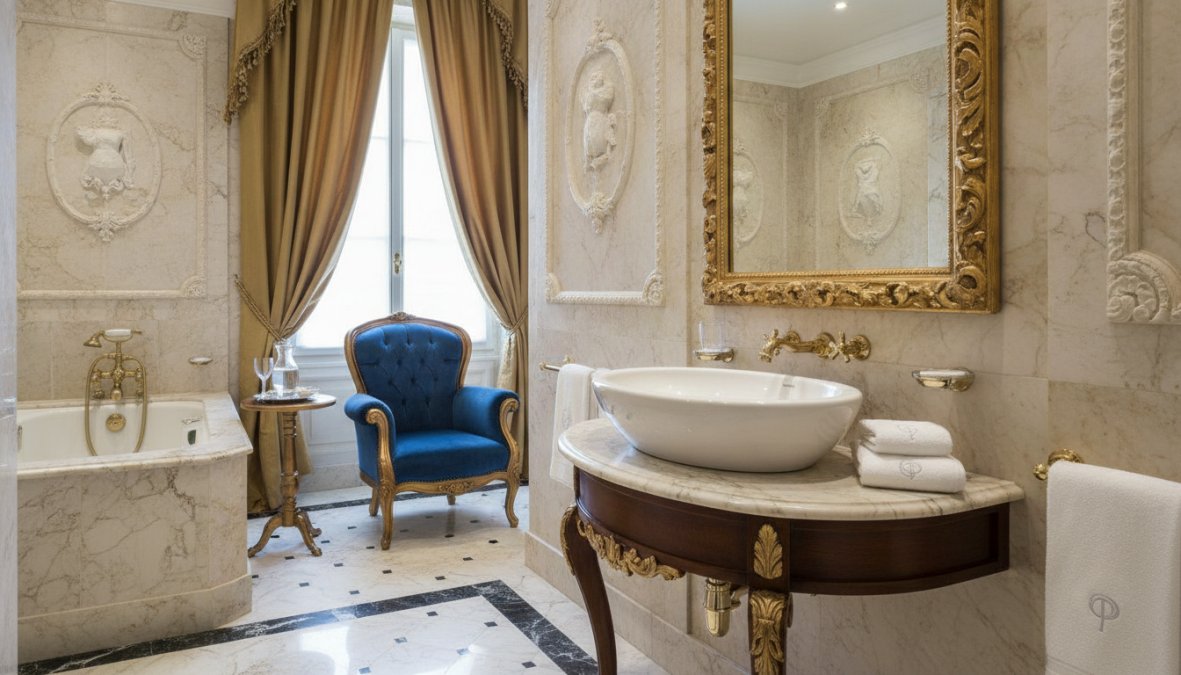
Customization to specific room geometries and design concepts is a core competence of Casa Padrino. If your hotel has a special design concept or you need to furnish rooms with unusual proportions, custom solutions from Casa Padrino can meet your requirements.
With over 20 years of experience in international hotel projects and references from luxury brands that demand the highest quality, Casa Padrino offers not just furniture, but a complete concept for luxury hotel interiors. The combination of traditional European craftsmanship and timeless design creates an ambiance of the highest elegance that delights your guests and justifies your investment over decades.
Investing in Casa Padrino furniture is an investment in the longevity and prestige of your hotel. This furniture will not be replaced in 5 years—it becomes a signature of your hotel that guests recognize and appreciate.
Calculating hotel furnishing costs is a complex task that requires strategic thinking, financial discipline, and a deep understanding of quality. By understanding these fundamentals and conducting a structured cost analysis, you can ensure that your investment is not only economically profitable but also creates a hotel that your guests love.
Discover the exclusive collection from Casa Padrino and let our experts support you in planning your hotel interior. Visit casa-padrino.de and find out how we can make your vision of a luxurious, economically optimal hotel interior a reality.
Frequently Asked Questions
What is the average cost of hotel room interior design per category?
The costs of hotel room furnishings vary greatly depending on the hotel category and level of furnishing. For a 4-star hotel, the investment budgets for furniture, lighting, and accessories are significantly higher than for budget hotels. Room rate calculations should take into account that luxury hotels work with high-quality materials such as solid wood, marble, and bronze, which reduces operating costs in the long term through durability.
How do fixed and variable costs differ in hotel furnishing calculations?
Fixed costs include initial furnishing, furniture, and structural elements that are one-off investments. Variable costs arise from maintenance, replacement investments, and regular renovation costs. A precise cost analysis separates these items to create realistic operating costs and ROI forecasts. Budget planning for hotel renovations should take both factors into account.
What role does tax depreciation (AfA) play in hotel interior design costs?
The depreciation of furniture and furnishings (AfA) significantly reduces taxable profits. Hoteliers should clarify with their tax advisor which hotel FF&E costs can be written off as operating resources. This affects the actual profitability of investment planning and should be included in the cost calculation.
How can you save on hotel furniture prices without losing quality?
Modularity instead of custom manufacturing reduces costs significantly without diminishing the impression of luxury. Long-term partnerships with suppliers like Casa Padrino enable better conditions with consistent hotel room furnishings. A well-thought-out replacement investment strategy and proactive maintenance prevent expensive emergency renovations and optimize operating costs over the years.