Table of Contents
- What is Planning Interior Design for Boutique Hotels?
- Boutique Hotel Design Concepts: Fundamentals and Strategies
- Creating Guest Experiences Through Thoughtful Space Planning
- Buying Luxury Hotel Furniture: Material Selection and Quality
- Lighting Concepts and Atmosphere in Interior Architecture
- Sustainable Materials and Circular Design in Boutique Hotels
- Budget Planning and ROI for Exclusive Hotel Furnishings
- Technology Integration Without Design Compromises
Last updated: July 7, 2026
Planning Interior Design for Boutique Hotels: The Complete Guide
Planning interior design for boutique hotels requires more than beautiful furniture. It is about creating a cohesive world of experience that draws guests into the moment and leaves lasting memories. At Demotex GmbH, we understand that every boutique hotel must tell its own story—one expressed through every room, every surface, and every detail. This guide shows you how to plan exclusive hotel furnishings that not only function perfectly but also enchant your guests.
What is Planning Interior Design for Boutique Hotels?
Planning interior design for boutique hotels is the art of furnishing small, independent hotels in a way that fundamentally distinguishes them from large chain hotels. It is not about mass production, but about individuality, authenticity, and creating spaces that tell a story.
Boutique hotels cater to guests who value personality, quality, and unique experiences. The interior architecture must meet these expectations: elegant, functional, and reflective of the hotel’s character. Casa Padrino has over 20 years of experience in furnishing such properties and knows exactly how luxury interiors work.
The key lies in the balance: your spaces must be both comfortable and aesthetically impressive at the same time. A beautiful room where guests sleep poorly is just as much of a failure as a functional room without a soul.
Boutique Hotel Design Concepts: Fundamentals and Strategies
Successful boutique hotel design concepts do not happen by accident. They are based on a clear strategy that takes your brand identity, your target audience, and the local culture into account.
This starts with knowing who your guests are. Are they business travelers, culture enthusiasts, or young couples? Every target group has different expectations regarding atmosphere and amenities. Your design must meet these before a guest even receives their key.
A good concept also defines which spaces are central. In some hotels, it is the lobby; in others, the restaurant or the bar. Casa Padrino supports you in selecting luxury hotel furniture that showcases these core areas perfectly.
Developing Brand Identity and Storytelling
Your brand identity is the foundation of all design decisions. It answers the question: Who are we, and why should someone stay here?
Your identity must be tangible in the space. If your hotel positions itself as "authentic and traditional" but your furniture feels modern and cold, the message is contradictory. Guests sense the disconnect.
Storytelling means that every element in the space is part of a larger narrative. A historic hotel might use Baroque or Neoclassical style furniture, not as kitsch, but as an authentic reference to the era. Casa Padrino offers Baroque furniture and other classic styles that convey exactly this historical depth.
Your brand identity must be visible in every room. If your story is not told through the interior architecture, you are not telling it at all.
Sensory Branding in Interior Design
People do not experience spaces only visually. They smell, hear, feel, and taste them. Sensory branding utilizes all of these senses to create an unforgettable experience.
This begins with texture. High-quality fabrics, solid wood, and marble speak through their tactile feel. When a guest touches an armchair armrest made of genuine leather, it sends a completely different signal than faux leather. Casa Padrino uses high-quality materials such as solid wood, marble, and bronze, which offer exactly this sensory depth.
Scent is often underestimated. A subtle, consistent fragrance in the lobby creates an emotional connection. Light also has a powerful effect: warm, indirect light feels welcoming, while cold light feels clinical. Good acoustics make a room feel alive, whereas a lack of reverberation can make it feel dead.
Creating Guest Experiences Through Thoughtful Space Planning
The guest experience begins with the layout of the space. How does a guest feel upon arrival? Can they easily find the reception? Does the path to their room feel natural?
A good layout creates intuitive wayfinding without making the guest feel lost. In boutique hotels, this often works differently than in large hotels. Instead of long, monotonous corridors, you can create niches, small lounges, and intimate areas. This makes the hotel feel more human and personal.
The balance between openness and privacy is crucial. Too open feels like mass processing; too closed off feels isolating.
Combining Functionality and Aesthetics in Guest Rooms
The guest room is the most important space. This is where your guest spends most of their time.
Functionality specifically means: a bed that provides a great night’s sleep, lights that can be dimmed continuously, power outlets in the right places, and a desk that is actually suitable for working.
But aesthetics must not suffer. The solution lies in thoughtful design. High-quality luxury hotel furniture is not only beautiful, it is also ergonomic, robust, and durable. A chair from Casa Padrino looks elegant and remains perfectly comfortable to sit on even after 10 years.
Materials play a major role. Solid wood feels warmer than plywood. Genuine leather ages more beautifully than faux leather. These differences influence how a room feels.
Many hotels cut corners on beds. This is a mistake. A bad bed ruins even the best impression. Guests will forget beautiful wallpaper, but they will never forget a poor night’s sleep.
Designing the Lobby and Public Areas as an Experience
The lobby is your first promise to the guest. It tells them who you are in the first three seconds.
An impressive lobby must be functional (reception, check-in) and evoke an emotional response. In boutique hotels, the lobby is often smaller than in large hotels. This is an advantage: you can create intimacy. A smaller space with a thoughtful design feels highly exclusive.
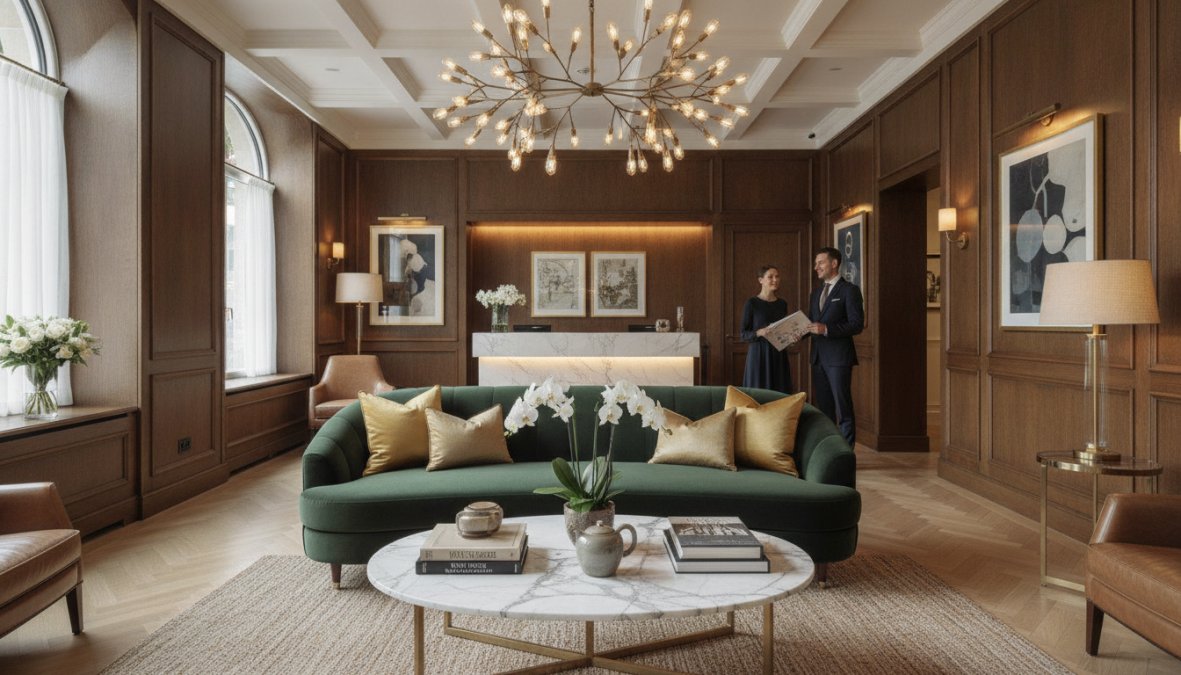
Casa Padrino has extensive experience with luxury hotel furniture that strikes this balance. A statement sofa, an impressive chandelier, and high-quality carpets make a lobby unforgettable.
The bar or restaurant are also public spaces that leave a lasting impression on guests. This is where your brand should express itself clearly. The choice of chairs, tables, and lighting contributes significantly to the overall experience.
Buying Luxury Hotel Furniture: Material Selection and Quality
Choosing the right furniture is crucial. This is where your design vision either becomes reality or fails.
Buying luxury hotel furniture is not about finding the lowest price, but about quality, durability, and aesthetics. A hotel is not a private home. The furniture is used intensively by many different people, often under demanding conditions.
Material selection is fundamental. Solid wood is more expensive than plywood, but it lasts for decades. Genuine leather is more expensive than faux leather, but it ages more beautifully. Casa Padrino uses high-quality materials such as solid wood, marble, and bronze, which luxury hotels have relied on for generations.
When selecting materials, you should also consider maintenance. Some materials require regular care. This is not a disadvantage; it is part of the luxury experience.
Invest in quality, not quantity. A room with 10 high-quality pieces of furniture feels more luxurious than a room with 20 cheap ones. Less is more when the quality is right.
For bespoke furniture, Casa Padrino offers customized solutions. If your space has unusual proportions or you have a very specific vision, this is the perfect solution.
Lighting Concepts and Atmosphere in Interior Architecture
Lighting is often underestimated. It is not just functional; it is emotional. The wrong lighting can ruin a beautiful room, while the right lighting can make a simple room feel magical.
A good lighting concept has multiple layers. Ambient lighting provides orientation. Accent lighting highlights specific elements. Mood lighting creates atmosphere.
In boutique hotels, lighting should be dimmable. A guest needs different lighting conditions in the morning than in the evening. Smart lighting systems make this possible without feeling overly technical.
Color temperature is important. Warm light (2700-3000K) feels welcoming and relaxing. Cold light (5000K+) feels energetic but can also seem clinical. Warm light is much better suited for bedrooms.
Casa Padrino also offers high-quality lighting solutions that are not only functional but also aesthetically impressive. A chandelier is not just a light source; it is a work of art.
Sustainable Materials and Circular Design in Boutique Hotels
Sustainability is no longer a trend; it is an expectation. Guests want to know that their hotel cares about the environment.
Sustainable materials are often more durable as well. Solid wood from sustainable forestry is not only ecologically superior, but it is also more stable than plywood. Natural fabrics like linen and wool are more durable than synthetics.
Circular design means that at the end of their life cycle, furniture and materials do not end up in a landfill but are reused or recycled. Casa Padrino works with sustainable materials and manufacturing processes.
A practical approach: choose timeless designs instead of short-lived trends. A Baroque-style chair from 1750 is still beautiful today. A plastic-design chair from 2005 already looks outdated. Timeless designs last longer and do not need to be replaced as often.
Budget Planning and ROI for Exclusive Hotel Furnishings
Many hoteliers fear high upfront costs. However, the perspective must be long-term.
Budget planning requires you to weight different areas differently. The guest room area should receive a large share, and while the lobby should be impressive, it does not need to fill every single square meter with luxury.
ROI is not measured in money alone. A beautiful hotel attracts better guests who pay higher rates, book longer stays, and recommend the hotel to others. Studies show that guests are willing to pay 15-25% more when the furnishings and atmosphere are right. This means investing in good design pays off.
Casa Padrino also offers luxury villa furniture and bespoke solutions. You pay for what you need, and only that.
High-quality furniture lasts longer. A cheap chair has to be replaced after 5 years. A high-quality chair lasts 20 years. In the long run, the more expensive chair is more cost-effective.
Plan for 10-15 years of use. A piece of furniture that costs 5,000 euros and lasts 10 years costs you 500 euros per year. A piece of furniture that costs 1,000 euros and lasts 2 years also costs you 500 euros per year, plus the stress of replacement.
Technology Integration Without Design Compromises
Modern guests expect technology. But technology can also ruin spaces if it is not thoughtfully integrated.
The problem: technology is often highly visible. Cables, devices, and screens disrupt the flow of an elegant room. The solution lies in smart integration.
Hide technology wherever possible. Cables should not be visible. Speakers can be built into the ceiling. Lights can be controlled via smartphone without visible switches.
At the same time, technology should be subordinate to aesthetics. A large, ugly television ruins a beautiful room. Modern solutions offer elegant alternatives: a TV integrated into the wall, or a hidden projector.
Casa Padrino also offers interior design solutions for hotels that elegantly integrate technology. The goal is always: technology should be invisible, yet work flawlessly.
| Technology Element | Integration | Effect |
|---|---|---|
| Lighting | Built into ceiling/wall | Invisible, fully controllable |
| Television | Recessed into the wall or hidden | Elegant, non-dominant |
| Speakers | Built into ceiling/wall | Room-filling sound without visible devices |
| Air Conditioning | Hidden ducts, elegant vents | Functional, invisible |
| Power Outlets | Elegant, hidden solutions | Practical, non-disruptive |
| Door Locks | Digital systems with elegant design | Secure, modern, discreet |
Planning interior design for boutique hotels is both an art and a science. It requires an understanding of design, psychology, functionality, and sustainability. When you combine these elements correctly, something extraordinary is created: a space where guests not only feel comfortable but which they will never forget.
Casa Padrino understands this complexity. With over 20 years of experience in furnishing luxury hotels worldwide, the company offers high-quality luxury hotel furniture and luxury interior design expertise. From classic Baroque furniture styles to contemporary concepts, Casa Padrino has the experience and craftsmanship to turn your vision into reality.
Discover the world of exclusive hotel furnishings at casa-padrino.de and be inspired by international references that show how luxury works.
Frequently Asked Questions
What makes good interior design for boutique hotels?
Successful interior design for boutique hotels combines individuality, functionality, and sensory branding. It tells a story through design concepts, material selection, and space planning. The guest experience is at the center of everything—from the lobby to the guest room. Exclusive furniture and thoughtful lighting concepts create an unforgettable atmosphere that stands out from standardized hotels.
What role does luxury hotel furniture play in planning interior design?
Luxury hotel furniture is the foundation of high-quality hotel interiors. It defines not only the aesthetics but also comfort and durability. High-quality materials such as solid wood, marble, and bronze create exclusivity and hospitality. Bespoke furniture makes it possible to adapt the furniture precisely to room geometries and design concepts—a key element for boutique hotels.
How do you integrate local culture and history into the design concept?
Storytelling through design creates emotional connections. Use local craftsmanship, regional materials, and cultural elements in your interior design. This can be reflected in wall designs, selected furniture, or decor. An authentic brand identity that respects the surroundings makes your boutique hotel memorable and sets it apart from the competition.
What compliance standards do I need to consider in hotel planning?
When planning interior design for boutique hotels, fire safety regulations, accessibility, and ergonomic standards are crucial. Furniture must be certified fire-resistant, and escape routes must remain clear. Pay attention to slip-resistant flooring, safe electrical installations, and secure furniture anchoring. Casa Padrino offers hotel interior solutions that meet all relevant safety standards.
How do I plan the budget for exclusive boutique hotel furnishings?
Budget planning depends on room size, material selection, and the degree of customization. Invest in timeless, high-quality furniture that retains its value over the long term. Consider maintenance and replacement costs. For specific quotes and ROI analyses, contact Casa Padrino directly—the company offers tailored solutions for various budget requirements.
How do I combine technology with elegant interior design?
Modern boutique hotels integrate technology discreetly: smart lighting, hidden power outlets, and elegant control elements. Technology should not compromise aesthetics. Choose design solutions where devices are seamlessly integrated into the interior design. This creates convenience without compromising on luxury and atmosphere.