Sustainable Luxury Furniture for the Hotel Industry: The 2026 Guide

Table of Contents

Last updated: September 15, 2026

Sustainable Luxury Furniture for the Hotel Industry: What Makes the Difference

The global market for hotel furniture is growing from USD 4.72 billion in 2025 to a projected USD 6.01 billion by 2031, as shown by Hospitality Furniture Trends 2026. Sustainable luxury furniture for the hotel industry is far more than a passing trend: it combines prestigious craftsmanship with ecological responsibility and is becoming a decisive competitive factor for hotel operators. Casa Padrino has been manufacturing custom luxury hotel furniture for over 20 years, supporting hotels, restaurants, and prestigious business premises from the initial sketch to complete contract furnishing. This guide shows how you can combine sustainability and prestige in one furnishing concept.

Definition: Sustainability Without Loss of Prestige

Sustainable luxury furniture for the hotel industry refers to pieces that combine the highest aesthetic standards with resource-saving materials, a long service life, and a transparent supply chain. The apparent contradiction between luxury demands and the circular economy dissolves as soon as durability becomes the central design principle. This is precisely where the difference lies compared to short-lived interior solutions: a solid Baroque table made of certified wood lasts for decades, whereas cheap alternatives have to be replaced after just a few seasons.

Benefits for Hotel Operators and Guests

The benefits range from lower replacement investments to a measurably better guest experience. Sustainable products that are free of harmful chemicals improve indoor air quality and increase the well-being of guests and staff, according to Jording. For hotel operators, this means fewer complaints, higher guest satisfaction, and a strong selling point for sustainable travel. At the same time, ongoing costs decrease because high-quality contract furniture needs to be replaced less frequently.
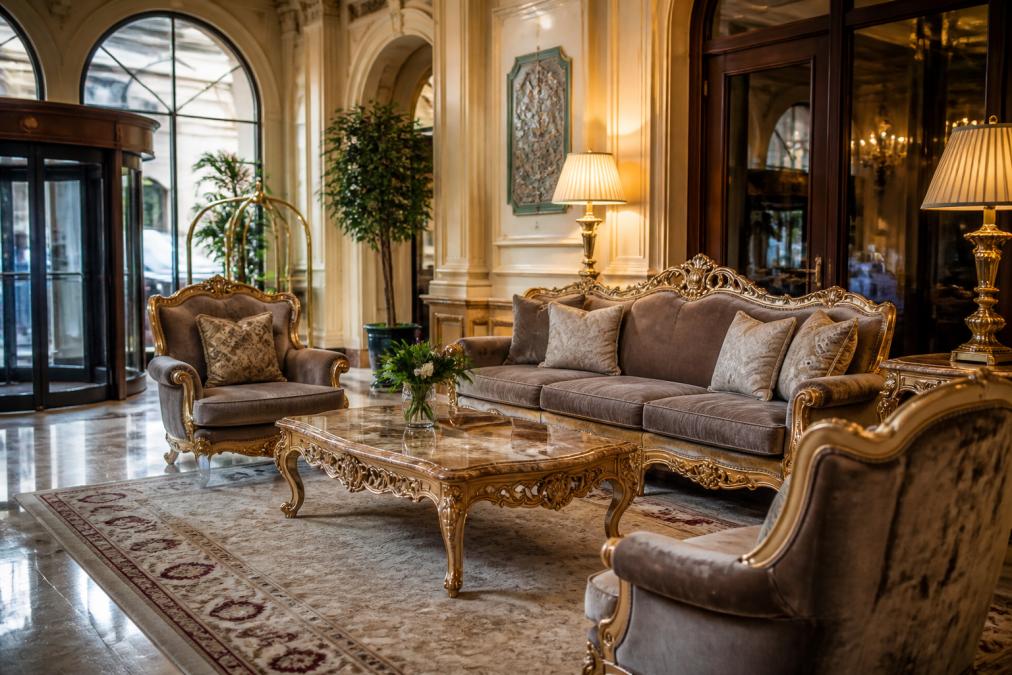
Elegant hotel lobby with solid Baroque furniture made of certified wood, fine fabric upholstery, and warm lighting that highlights the craftsmanship and sustainable luxury of the interior

Material Science: Certified Woods, Natural Fibers, and Recycled Materials

The choice of material determines the ecological balance and durability. Certified woods from sustainable forestry, natural fibers, and recycled materials form the basis of any responsible procurement. Casa Padrino processes solid wood, marble, bronze, and gold leaf using traditional European craftsmanship, ensuring that each piece of furniture remains usable for decades.

Certified Woods: FSC and PEFC as Standard

For hotel furniture, woods from certified forestry are ideal, such as those certified by the FSC (Forest Stewardship Council) or PEFC (Programme for the Endorsement of Forest Certification). These seals guarantee that the wood comes from sustainably managed forests where ecological and social standards are met. Casa Padrino exclusively uses woods with the corresponding certification for its luxury hotel furniture, keeping the supply chain transparent and traceable. Solid oak, beech, or walnut wood is not only durable but also repairable and recyclable at the end of its service life.

Natural Fibers and Recycled Materials

In addition to wood, natural fibers such as linen, wool, cotton, or silk are suitable for upholstery and covers. These materials are biodegradable, skin-friendly, and free from synthetic pollutants. Recycled materials such as recycled aluminum, glass, or plastics can be used in modern hotel concepts, provided they meet aesthetic and functional requirements. Casa Padrino combines traditional materials with innovative recycling solutions for its Baroque and custom furniture to unite sustainability and luxury.

Pollutant-Free and Indoor Air Quality

Pollutant-free materials are not a luxury, but a health precaution. Eco-friendly materials without harmful chemicals improve indoor air quality and thus the well-being of all users. Hotels that plan consistently in this area also meet growing ESG criteria and strengthen their sustainability strategy. Casa Padrino ensures that all materials are pollutant-free and uses only tested, low-emission materials for its luxury interior design projects.

Regional Sourcing and Short Transport Routes

An often underestimated sustainability factor is regional sourcing. Short transport routes significantly reduce CO2 emissions and increase supply chain transparency. Casa Padrino sources a large portion of its materials from European sources, keeping transport routes short and the supply chain traceable. This not only benefits the environment but also quality assurance, as regional suppliers often meet stricter standards.

Pro Tip
When sourcing hotel furniture, look for certificates such as FSC or PEFC and ask specifically about the origin of the materials. Casa Padrino provides the appropriate verification for every project.

Custom Hotel Furniture: Longevity as a Sustainability Factor

Custom hotel furniture is the most effective form of resource conservation. Instead of standard items that are replaced after a few years, pieces are created that fit the room geometry and design concept perfectly and last for decades. The selection of regional materials and the durability of the furniture are considered key factors for responsible hotel development, according to Ferrocom-Sitwell. For commercial use, wear resistance is what matters most: contract furniture must withstand daily wear and tear.

Sustainability Factor Impact Relevance for Operators
Longevity Replacement cycles are extended Lower investment costs
Custom Manufacturing Perfect fit, no waste Higher investment security
Certified Woods Transparent supply chain Meets ESG criteria
Absence of pollutants Better indoor air quality Enhanced guest experience

Sustainable Hotel Interior Design: Regional Supply Chains and Circular Economy

Sustainable hotel interior design begins with short transport routes. Regional supply chains significantly reduce the carbon footprint and increase supply chain transparency. Circular economy and upcycling concepts go even further: furniture is repaired, refurbished, or reused in new projects instead of being disposed of. This material ecology makes sustainability a measurable part of the furnishing concept.

Luxury Hotel Furniture Manufacturers: Certifications, Life Cycle Assessment, and LCA

Luxury hotel furniture manufacturers differ primarily in terms of verifiability. Certifications and quality seals prove that materials and processes meet standards. A Life Cycle Assessment (LCA) evaluates the environmental impact over the entire life cycle, from raw material extraction to disposal. Casa Padrino provides the necessary verification for every project and combines Italian-inspired elegance with European craftsmanship, so that sustainability certificates and prestige value reinforce each other.

Contract Furnishing for the Hotel Industry: Financing, Leasing, and Maintenance

Contract furnishing for the hotel industry is an investment decision, not a one-off expense. Furniture leasing models and funding programs spread the costs over the period of use and improve economic efficiency. A planned maintenance and repair service further extends the lifespan and ensures investment security. Sustainable luxury furniture for the hotel industry therefore pays off not only ecologically but also economically.

Furniture Leasing: Furniture-as-a-Service as a Circular Model

A model that is not yet widely used but is forward-looking is furniture leasing, also known as Furniture-as-a-Service (FaaS). In this model, the furniture remains the property of the manufacturer or a lessor, while the hotel pays a regular usage fee. At the end of the contract term, the furniture is taken back, refurbished, and reused in new projects. This model fits perfectly with the circular economy and significantly reduces capital commitment for hotel operators.

Funding Programs for Sustainable Investments

Hotel operators should check whether their planned furniture investment is eligible for funding, as sustainable furniture is often part of a holistic energy and resource concept. Casa Padrino supports its clients in compiling the necessary documentation for funding applications.

Maintenance and Repair: Extending Lifespan Instead of Buying New

A professional maintenance and repair service is the key to extending the lifespan of hotel furniture. Regular care, such as tightening screws, refreshing upholstery, or touching up surfaces, prevents premature wear and tear.

Economic Benefits of Sustainable Furniture

Sustainable luxury furniture for the hotel industry is not only an ecological decision but also an economic one. Due to the longer service life, replacement investments decrease while maintenance costs remain predictable. Leasing models improve liquidity, and funding programs reduce the initial investment. At the same time, sustainable furniture increases attractiveness for environmentally conscious guests and strengthens the brand. Casa Padrino accompanies hotel operators from the initial consultation through financing to long-term maintenance, offering holistic hotel interior solutions.

Key Takeaway
Sustainable hotel furniture is an investment that also pays off economically through durability, eligibility for funding, and leasing models. Casa Padrino offers tailor-made solutions for this.

Conclusion: Sustainable Luxury Furniture as a Strategic Asset

Sustainable luxury furniture for the hotel industry is not a marketing label, but a measurable strategic asset. Those who rely on certified materials, custom manufacturing, and the circular economy reduce costs, meet ESG criteria, and create a distinctive ambiance. Casa Padrino accompanies your project from planning to complete contract furnishing, with luxury hotel furniture, Baroque furniture, and custom interior solutions made from high-quality materials.

Frequently Asked Questions

What characterizes sustainable luxury furniture in the hotel industry?

Sustainable luxury furniture combines the highest craftsmanship with ecological responsibility. This includes certified woods, pollutant-free surfaces, durable constructions, and transparent supply chains. Casa Padrino manufactures luxury hotel furniture that meets both aesthetic demands and environmental standards.

Why is durability a crucial sustainability factor for hotel furniture?

Durable furniture reduces resource consumption because it needs to be replaced less frequently. High-quality custom hotel furniture from Casa Padrino is designed for decades of use, reducing the carbon footprint and operating costs in the long term.

How can exclusive design be combined with ecological standards in the hotel industry?

By choosing certified materials, regional manufacturing, and repairable constructions. Casa Padrino combines Baroque elegance with sustainable processes, offering luxury hotel furniture that meets ESG criteria.

What role does the choice of materials play in the sustainable furnishing of luxury hotels?

Solid wood from sustainable forestry, natural fibers, and recyclable metals are central. They guarantee freedom from pollutants, improve indoor air quality, and strengthen the ecological balance. Casa Padrino focuses on material ecology without compromising on design.


The challenge remains to combine the highest luxury standards with strict sustainability requirements. This is precisely what Casa Padrino stands for: with over 20 years of experience in international hotel projects, exclusive collections in Baroque, Rococo, and Art Nouveau styles, as well as customized complete solutions for the upscale hotel industry. Discover the Casa Padrino collection for luxury hotel furniture and let our team plan your furnishing concept.
Sustainable Hotel Furniture for Eco-Conscious Guests

Table of Contents

Last updated: September 13, 2026

What Distinguishes Sustainable Hotel Furniture for Eco-Conscious Guests

The global hospitality market is growing to $5.82 trillion in 2026, up from $5.52 trillion the previous year, according to the 2026 Hospitality Trends Global Market Report. Sustainable hotel furniture for eco-conscious guests is no longer a niche topic, but a procurement criterion with a direct impact on booking decisions. Casa Padrino has been manufacturing luxury hotel furniture for over 20 years, combining traditional European craftsmanship with materials that withstand a long service life. Those who furnish rooms today are not planning for a season, but for decades.

Definition and Differentiation from Conventional Contract Furnishing

Sustainable hotel furniture refers to contract furniture whose ecological impact is evaluated over its entire lifecycle: raw material origin, manufacturing, service life, ease of maintenance, and disposal.

The difference from conventional contract furnishing lies less in the design and more in the balance sheet. Conventional room furniture is often designed for short replacement cycles. Sustainable contract furniture, on the other hand, relies on solid wood, repairable joints, and surfaces that can be refinished. This is precisely where it is decided whether a property actually reduces its carbon footprint or merely reports on it.

Why Guests Expect Sustainable Furnishings Today

European hotel guests now view sustainable furniture as a standard, not an additional service, as shown by HIT Preless on guest attitudes. According to Shiji Insights on guest preferences, over a third of guests belong to the next generation, which heavily prioritizes technology and sustainability. An important secondary finding: social pressure has a stronger effect on guests than purely ecological appeals, according to Scientific American. Visible sustainability in the interior is therefore more effective than any signpost.

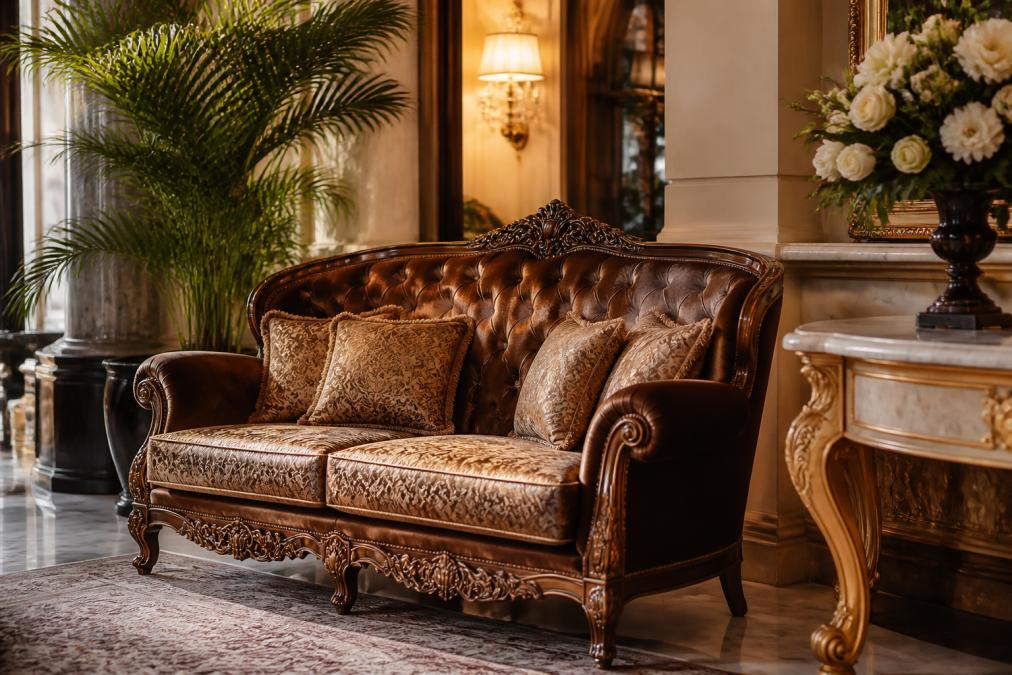
Elegant hotel lobby featuring a magnificent solid wood Baroque sofa by Casa Padrino, standing in warm light next to a marble console, conveying an atmosphere of timeless luxury and sustainability

Material Ecology: Recycled Plastics, Solid Wood, and Natural Raw Materials

Material ecology begins with the question of what happens to a chair after twenty years. Anyone purchasing hotel furniture should therefore not only check the recycling rate of a material, but the entire material chain: raw material origin, processing, repairability, and traceability. The following material groups cover the majority of sustainable contract furnishing and differ significantly in their strengths.

Solid Wood: Durability Through Refinishing

Solid wood is the classic choice among sustainable hotel furniture because, unlike veneer or particle board, it can be sanded down and re-oiled or waxed multiple times. Oak, walnut, and beech from European forestry provide the necessary hardness for professional hotel operations. At Casa Padrino, solid woods are used in high-quality solid wood Baroque furniture as well as in modern contract collections. The construction is crucial: solid wood moves, which is why it requires traditional mortise and tenon joints instead of rigid gluing to ensure a piece of furniture remains dimensionally stable for decades.

Marble and Natural Stone: Patina Instead of Replacement

Marble, granite, and travertine are mineral materials with a virtually unlimited lifespan. Scratches and stains can be professionally repolished, making replacement completely unnecessary. In hotel bathrooms, lobbies, and restaurants, natural stone slabs are therefore one of the most economical sustainable options. Casa Padrino processes marble in luxurious consoles and vanity units, among other things, which can be integrated into existing interiors without having to completely refurnish entire rooms.

Bronze and Metal: A Cycle Without Loss of Quality

Bronze, brass, and high-quality steel can theoretically be melted down and reshaped indefinitely without their material properties suffering. Unlike plastics, metal recycling does not result in downcycling. At Casa Padrino, bronze elements can be found in gilded Baroque seating groups and in fittings that can be supplied for decades to come – an important point for properties that want to keep their furnishings consistent over long periods.

Recycled Plastics: Sensible, but with Limits

Recycled plastics are sustainable when they are processed as single-variety materials and without harmful additives. Chairs made of recycled polypropylene or recycled PET are suitable for terraces, breakfast rooms, or high-traffic areas. The disadvantage: after several recycling cycles, the material quality decreases, and many composite plastics can hardly be separated at the end of their service life. For prestigious hotel areas, solid wood, marble, and metal therefore remain the more durable choice.

Natural Fibers and Textiles: Underestimated Levers

Upholstery fabrics made of wool, linen, hemp, or recycled polyester contribute significantly to indoor air quality because they emit fewer volatile organic compounds than coated synthetic fabrics. At the same time, high-quality upholstery fabrics can be reupholstered multiple times if the base frame is solid. This is precisely what production at Casa Padrino is designed for: durable covers on repairable frames, so that an armchair is reupholstered after ten years rather than replaced.

Key Insight
The most sustainable material choice is not the one with the highest recycling rate, but the one with the longest service life and the best repairability. Solid wood, marble, bronze, and natural fibers outperform short-lived composite materials in every lifecycle assessment.

Durability in Hotel Furnishing as the Most Important Sustainability Factor

Durability in hotel furnishing is the single largest lever for a property’s carbon footprint. A piece of furniture that remains in a room for thirty years instead of eight spreads its manufacturing emissions over almost four times as many operating years. This is mathematics, not ideology.

For operators, this means a shift in purchasing logic: away from the lowest unit price, toward investment security. Statement furniture made of solid wood costs more upfront but amortizes over its service life. This is precisely what production at Casa Padrino is designed for: durability for professional hotel operations, not for private homes.

Sustainable Hotel Interior Design: Circular Economy and Pollutant-Free Indoor Air

Sustainable hotel interior design means combining design, comfort, and responsibility in one concept, which according to Green Pearls on hotel furnishing is considered the supreme discipline of contract furnishing. The circular economy does not start with recycling, but with construction: furniture that can be disassembled, reupholstered, and converted keeps the material cycle within the property.

The second lever is indoor air quality. Sustainable products are often free of harmful chemicals, which improves air quality for guests and employees, according to Jording on material health. For properties with allergy-friendly rooms or long stay durations, this is a measurable gain in comfort, not a marketing argument.

Get Started Today →

High-Quality Contract Furniture: Certificates, TCO, and Take-Back Systems

High-quality contract furniture cannot be recognized from a catalog image alone. Three testing authorities determine whether an offer is reliable: verifiable certifications, an honest lifecycle cost calculation, and a contractually guaranteed take-back system.

Certifications and Seals for Hotel Furniture

Relevant proof concerns freedom from pollutants, wood origin, and manufacturing standards. In procurement practice, the following seals in particular have established themselves:

  • FSC (Forest Stewardship Council) and PEFC prove sustainable forest management and an uninterrupted supply chain for wood products. For solid wood hotel furniture, FSC is the most reliable proof.
  • Blue Angel (Blauer Engel) identifies low-emission furniture and is a recognized standard for indoor air quality in public procurement.
  • Cradle to Cradle Certified evaluates products based on material health, circularity, and social fairness – particularly relevant for properties that want to demonstrate a true circular economy.
  • OEKO-TEX Standard 100 applies to upholstery fabrics and textiles and excludes harmful substances that can affect the skin or respiratory tract.
  • EU Ecolabel covers furniture and furnishings, combining environmental and health criteria over the entire lifecycle.

Important: Ask specifically for material proofs and origin documents instead of just counting seal logos. A certificate without reference to the specific component says very little. Have it confirmed which component bears which seal – at Casa Padrino, you can receive the corresponding material documents for the woods, marbles, and upholstery fabrics used upon request.

Lifecycle Cost Analysis (TCO) for Hotel Operators

The TCO calculation includes acquisition, cleaning, maintenance, refinishing, and disposal. A cheap chair that is replaced after five years is more expensive than a solid wood model with a twenty-year lifespan. The decisive key figure is the price per year of use, not the unit price.

Criterion Short-Lived Furnishings Sustainable Contract Furniture
Service Life 5-8 Years 15-30 Years
Maintenance Replacement Refinishing, Reupholstery
Disposal Replacement Procurement Take-Back, Upcycling
Indoor Air Varying Materials Pollutant-Free
Repairability Mostly Glued Disassemblable, Reorderable

Disposal and Take-Back Systems

Take-back systems close the loop: furniture is taken back, refurbished, or disassembled into individual parts. Clarify this contractually before ordering. Three models have proven successful in the hotel industry:

  • Take-back guarantee: The manufacturer undertakes to take back furniture after a defined period of use and recycle or utilize it professionally.
  • Furniture-as-a-Service: Instead of purchasing, use over a defined period is agreed upon, including maintenance and take-back. Interesting for properties with frequent renovation cycles because there is no residual value risk.
  • Upcycling program: Disused furniture is reupholstered, converted, or reused in other areas – such as an armchair from the lobby that continues to live in the breakfast room after refurbishment.

Pay attention to three points in the contract: Who bears the transport costs for the return? In what condition must the furniture be returned? And what proof of recycling do you receive for your sustainability reporting? Casa Padrino accompanies hotel projects from planning and delivery to the subsequent delivery of individual components, so that furnishings remain consistent over the years and do not have to be completely replaced.

Pro Tip
Request a TCO table and a written take-back commitment with every tender.

Regional Supply Chains and Social Responsibility in Procurement

Regional supply chains shorten transport routes and increase planning security because manufacturing and subsequent delivery are closer to the property. Social responsibility in procurement specifically means: traceable manufacturing conditions, fair working conditions, and documented origin. Together, both result in a sustainable value chain that can be proven to guests and auditing bodies. Casa Padrino manufactures in the European craft tradition and supplies complete furnishing concepts for hotels, restaurants, and prestigious business premises, from Baroque seating groups to matching lighting.

Conclusion: Sustainable Hotel Furniture as an Investment in the Future

Sustainable hotel furniture for eco-conscious guests is an investment decision with a measurable return: lower replacement costs, better indoor air, and reliable sustainability reports. Anyone furnishing today should think of material ecology, durability, and take-back together, not as three separate projects.


The challenge lies in procurement: consistent quality across 50 rooms, traceable materials, and a supplier who remains accessible even after delivery. Casa Padrino delivers exactly that, with exclusive furniture collections in Baroque, Rococo, and Art Nouveau styles, tailor-made furnishing solutions according to customer requirements, and high-quality materials such as solid wood, marble, and bronze. Start your project at casa-padrino.de and have a furnishing concept created that combines luxury and durability.

Frequently Asked Questions

What criteria define sustainable hotel furniture?

Sustainable hotel furniture is characterized by the use of environmentally friendly materials such as recycled plastics or certified woods. Other criteria include high durability, pollutant-free surfaces for good indoor air quality, and resource-saving production. Repairability and the possibility of recycling at the end of the lifecycle also play a decisive role. Casa Padrino attaches great importance to these aspects in its high-quality contract furniture in order to meet both aesthetic and ecological demands.

How does Casa Padrino support sustainable hotel planning?

Casa Padrino offers tailor-made solutions for sustainable hotel planning. From the selection of durable materials to the conception of a sustainable interior design and the delivery of complete furnishing packages, Casa Padrino accompanies hoteliers. The combination of traditional craftsmanship and timeless design results in furniture that lasts for years, thereby conserving resources. In addition, Casa Padrino advises on certifications and take-back systems to minimize the ecological footprint.

Why do guests increasingly prefer sustainably furnished hotels?

European hotel guests increasingly expect sustainable furniture in their accommodation (Hit Preless, 2026). Over a third of today’s guests belong to the next generation, which heavily prioritizes technology and sustainability (Shiji Insights, 2026). Sustainable products are often free of harmful chemicals, which improves indoor air quality (Jording, 2026). In addition, studies show that social pressure and the gain in comfort from sustainable products are more effective than purely ecological appeals (Scientific American, 2026).

What advantages do high-quality, durable furniture offer for a hotel’s carbon footprint?

High-quality, durable furniture reduces resource consumption because it needs to be replaced less frequently. This significantly lowers a hotel’s ecological footprint. By using recycled materials and offering the possibility of upcycling, the circular economy is promoted. An improved carbon footprint is not only good for the environment but also a strong selling point for eco-conscious guests. Casa Padrino supports hotels in achieving their sustainability goals through durable contract furniture.