Table of Contents
- Why Choosing the Right Materials for Hotel Furniture is Crucial
- Solid Wood and Hardwood Species for Heavy-Duty Hotel Furniture
- Engineered Wood vs. Solid Wood: Durability Comparison
- Types of Metal and Stainless Steel in Hotel Interiors
- Durable Hotel Furniture Fabrics and Upholstery
- Outdoor Materials: Polyrattan and UV Resistance
- Hotel Furniture Quality Features and Fire Protection Certifications
- Care of Hotel Furniture: Maintenance for Maximum Longevity
Best Materials for Durable Hotel Furniture: The Ultimate Guide
Last updated: July 13, 2026
Choosing the right materials for hotel furniture determines whether an interior lasts for years or just months. The best materials for durable hotel furniture are not just about aesthetics, but about the combination of durability, ease of maintenance, and cost-efficiency. Demotex GmbH has years of experience in furnishing luxury hotels and knows exactly which materials truly perform under continuous heavy use. In this guide, we will systematically examine the best materials for durable hotel furniture and show what hotel operators should look for when making their material choices.
The demands on contract furniture are significantly higher than on residential furniture. An armchair in a hotel room is used daily by different guests, while a desk experiences intensive use. Durability is not optional – it is an operational necessity. The best materials for durable hotel furniture must combine wear resistance, easy cleaning, fire protection, and repairability.
Why Choosing the Right Materials for Hotel Furniture is Crucial
The choice of material determines the lifespan of hotel furniture and thus also the return on investment. A hotel bed made of inferior materials wears out quickly, while high-quality solid wood with good craftsmanship lasts for decades. This is more than just a comfort factor – it is an economic necessity.
Hotel furniture must withstand intense daily wear and tear. Guests of varying weights and usage habits continuously put strain on chairs, beds, and tables. Added to this are aggressive cleaning agents, disinfectants, and frequent cleaning cycles. A material that works perfectly in a private living room can quickly fail in this context.
The best materials for durable hotel furniture also take regulatory requirements into account. Fire safety regulations such as DIN 4102 and EN 13501 are not optional – they are legally required. Equally important are hygiene standards and disinfection resistance, especially after the lessons of recent years. A material must not only be beautiful, but also easy to keep hygienically clean.
High-quality hotel furniture pays off quickly. Investing in the best materials for durable hotel furniture reduces replacement and repair costs by up to 60% over a ten-year period.
Solid Wood and Hardwood Species for Heavy-Duty Hotel Furniture
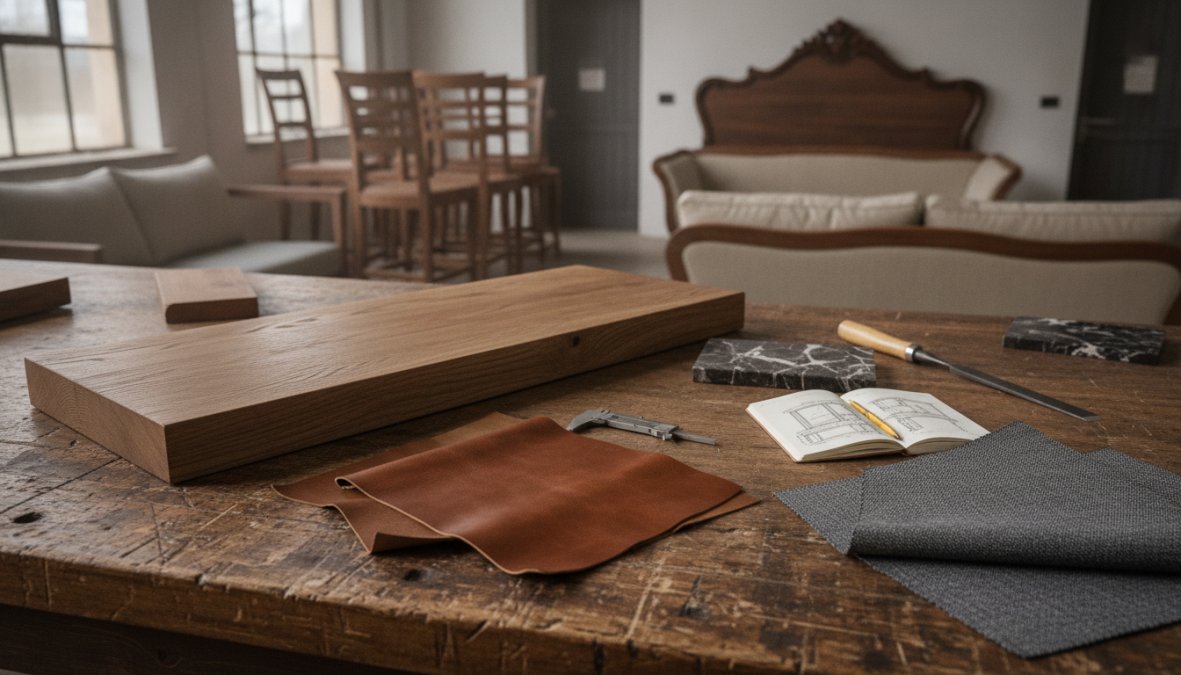
Solid wood remains the gold standard for durable hotel furniture. Unlike engineered wood, solid wood can be repaired, sanded, and refinished – a crucial feature for professional hotel operations.
Teak, Oak, and Other Premium Woods
Teak is the premium material for heavy-duty hotel furniture. It contains natural oils that make it resistant to moisture, insects, and decay. Teak can last for decades without losing its quality. However, it is costly and therefore more commonly found in luxury hotels.
Oak offers an excellent price-performance ratio. European oak is hard, dense, and durable. It can easily be oiled, waxed, or lacquered. Oak furniture in hotels shows only minimal signs of wear after years if properly maintained.
Beech is another excellent choice for contract furniture. It is denser than oak but more affordable than teak. Beech furniture is robust and highly repairable. Many high-quality hotel room interiors use beech as a base for beds, wardrobes, and desks.
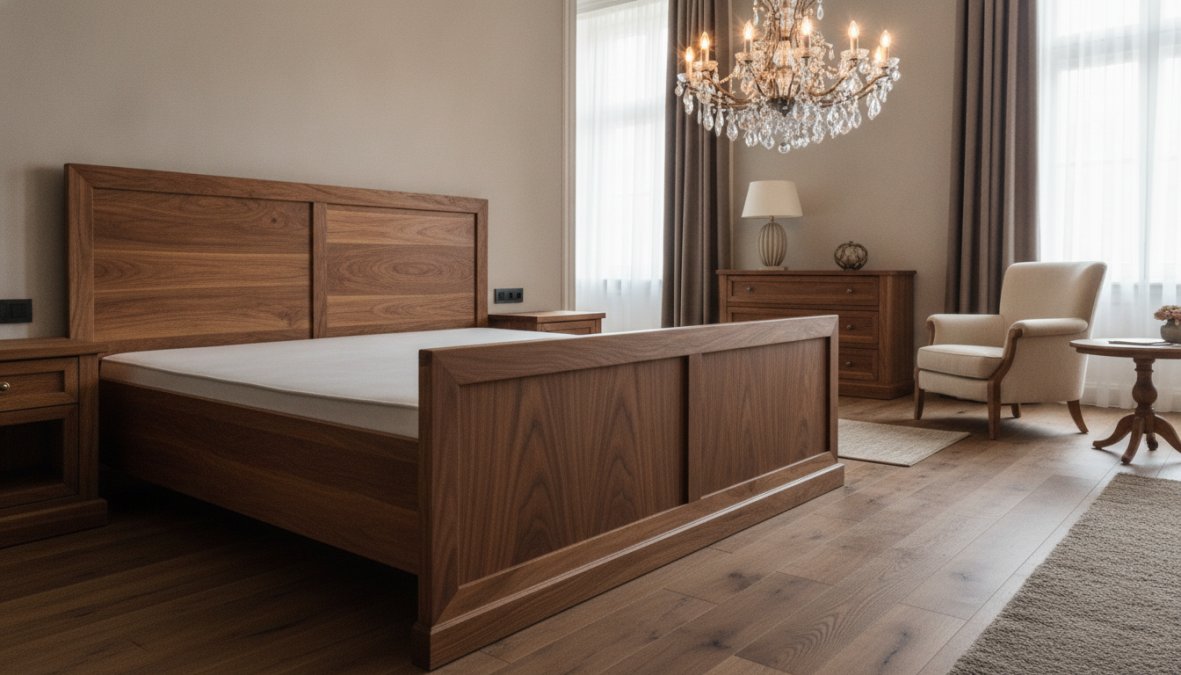
Walnut offers a warm aesthetic and good wear resistance. The wood is moderately hard but elegant in appearance. Walnut wood is frequently used in upscale hotels where design and durability are equally important.
Surface Coating and Craftsmanship
The best wood species is of no use if the surface coating is deficient. A high-quality surface coating protects the wood from water, chemicals, and mechanical damage.
Polyurethane lacquering is the standard in the hotel industry. It offers excellent protection, is highly durable, and is easy to clean. High-gloss, satin, and matte finishes are all suitable, depending on the design requirements.
Oil-wax coatings are more natural but require more regular maintenance. They are less suitable for high-traffic hotel furniture as they offer less protection than lacquers.
Craftsmanship is just as important as the material itself. All edges must be sealed to prevent swelling. Joints and connections must be precisely crafted. Casa Padrino uses traditional European craftsmanship to ensure that every piece of furniture is perfectly finished.
Solid wood with a high-quality polyurethane lacquer is the best combination for durable hotel furniture, capable of lasting 15-20 years without requiring major repairs.
Engineered Wood vs. Solid Wood: Durability Comparison
Engineered woods have their place, but not in the premium segment. MDF, plywood, and particle board are more affordable, but significantly less durable than solid wood.
MDF and Laminate for Contract Use
MDF (Medium-Density Fiberboard) is frequently used for budget hotels. It is inexpensive, uniform, and easy to process. However, MDF is susceptible to moisture. In humid environments – such as bathrooms or coastal hotels – MDF swells and loses its shape.
Laminate is a thin coating on particle board or MDF. It looks like wood but is significantly less durable. Laminate cannot be repaired – if it is damaged, the entire piece of furniture must be replaced.
| Material | Durability | Repairability | Moisture Resistance | Cost |
|---|---|---|---|---|
| Solid Wood | 15-30 years | Excellent | Good (when sealed) | High |
| Plywood | 8-12 years | Limited | Moderate | Medium |
| MDF | 5-8 years | Low | Poor | Low |
| Laminate | 3-5 years | None | Poor | Very low |
For durable hotel furniture, solid wood is the clear choice. The higher initial acquisition costs quickly amortize through reduced replacement and repair costs.
Types of Metal and Stainless Steel in Hotel Interiors
Metals play an important role in modern hotel furniture. They are used for bed frames, table bases, handles, and decorative elements.
Stainless Steel and Wear Resistance
Stainless steel is the best choice for metals in hotel furniture. It does not rust, resists corrosion, and is extremely durable. Stainless steel frames can last for decades without wearing out.
However, stainless steel is expensive and can appear cold. It is therefore often combined with wood – such as stainless steel bed frames with a solid wood headboard. This combination offers both durability and aesthetics.
Galvanized steel is a more affordable alternative. The zinc coating protects against rust, but not as reliably as stainless steel. In humid environments, galvanized steel can develop surface rust over time.
Aluminum is lightweight and corrosion-resistant, but not as hard as steel. It is frequently used for frames and structures where weight is a factor.
Brass and bronze are used in luxury hotels for decorative elements. They develop a patina that looks elegant but requires regular maintenance.
Durable Hotel Furniture Fabrics and Upholstery
The upholstery is crucial for the comfort and durability of armchairs, sofas, and beds. Poor fabrics wear out quickly and soon look shabby.
Solution-Dyed Acrylic, Polyester, and Microfiber
Solution-dyed acrylic is the best material for hotel upholstery. The color is integrated during fiber production, not applied afterward. This means the color does not fade or bleed. Solution-dyed acrylic can withstand hundreds of thousands of rubs – a measure of wear resistance.
Polyester is more affordable and also durable, but not as high-quality as acrylic. Polyester can become shiny over time and loses its color more quickly.
Microfiber is soft and comfortable, but less durable than acrylic. Microfiber fabrics show signs of wear more quickly and can be damaged by intensive cleaning.
Natural fabrics like cotton and linen are less suitable for hotel furniture. They are not as mold-resistant and stain more easily.
Rub Counts and Mold Resistance
Rub counts (Martindale cycles) are a standardized measure of wear resistance. A fabric with 50,000 rubs is suitable for light use. For hotel furniture, fabrics should have at least 100,000 rubs. Premium fabrics reach 200,000 or more.
Mold resistance is critical, especially in coastal hotels or regions with high humidity. Fabrics should have antimicrobial treatments to prevent mold growth. Solution-dyed acrylic is naturally mold-resistant because the dye is not just on the surface.
Cheap upholstery fabrics show visible signs of wear after 1-2 years. This damages the hotel’s reputation and forces expensive replacement measures. Invest in high-quality fabrics with at least 100,000 rubs.
Outdoor Materials: Polyrattan and UV Resistance
Many hotels have terraces, balconies, and outdoor areas. These require special materials that can withstand the elements.
Synthetic Weave and Weather Resistance
Polyrattan (also known as synthetic rattan) is the best material for outdoor hotel furniture. It looks like natural rattan but is weatherproof. Polyrattan does not fade, rot, or get infested by insects.
Genuine rattan is beautiful but not suitable for outdoor use. It quickly becomes brittle and rots in humid environments.
HDPE (High-Density Polyethylene) is a robust plastic for outdoor furniture. It is UV-resistant, colorfast, and durable. HDPE is more affordable than polyrattan but not as elegant.
Teak is also suitable for outdoor furniture. It is naturally weather-resistant and turns silver-gray over time. Teak garden furniture can last 20+ years but requires occasional oiling.
Metal (stainless steel or aluminum) is frequently combined with polyrattan or teak. These combinations offer durability and elegance for premium outdoor areas.
UV resistance is crucial. Fabrics and plastics that are not UV-resistant fade quickly in the sun. All outdoor materials should be specially treated against solar radiation.
Hotel Furniture Quality Features and Fire Protection Certifications
Durable hotel furniture must meet several quality standards. Fire protection is not optional – it is legally required.
DIN 4102 and EN 13501 Fire Safety Requirements
DIN 4102 is the German standard for the fire behavior of building materials. Furniture fabrics must meet at least Class B1 (flame-retardant). This is mandatory for public buildings like hotels.
EN 13501 is the European standard that complements DIN 4102. European hotels often must comply with EN 13501, especially when operating across borders.
Fire safety certificates are not easy to obtain. Fabrics and foams must undergo special testing. Cheap materials often fail to meet these standards.
Casa Padrino works only with certified materials. All upholstery fabrics, foams, and covers meet the strictest European fire safety requirements. This is a crucial difference compared to budget furniture suppliers.
Hygiene Standards and Disinfection Resistance
Hygiene is crucial in hotels. Surfaces must be able to be cleaned with strong disinfectants without being damaged.
Certain fabrics and surface treatments are disinfection-resistant. They can be cleaned with alcohol, chlorine, and other disinfectants without discoloring or degrading.
Antimicrobial treatments are important for upholstery fabrics. These prevent the growth of bacteria and fungi. Many premium fabrics already have such treatments built-in.
Smooth, sealed surfaces (wood with polyurethane lacquer, stainless steel) are easier to disinfect than porous materials. This is another reason why high-quality materials are so important in hotels.
Materials must not only be durable, but also hygienic to clean. Disinfection resistance is an often overlooked but critical criterion for hotel furniture.
Care of Hotel Furniture: Maintenance for Maximum Longevity
The best material choice is of no use without proper care. A well-thought-out maintenance program significantly extends the lifespan of hotel furniture.
Cleaning and Repairability
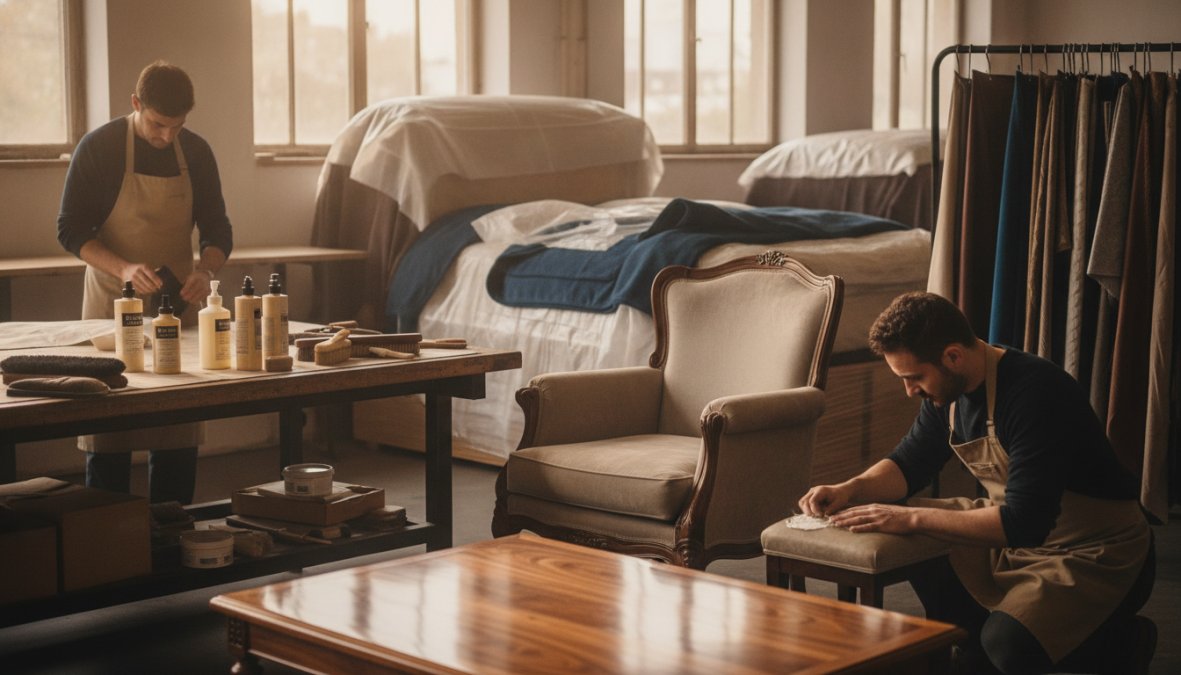
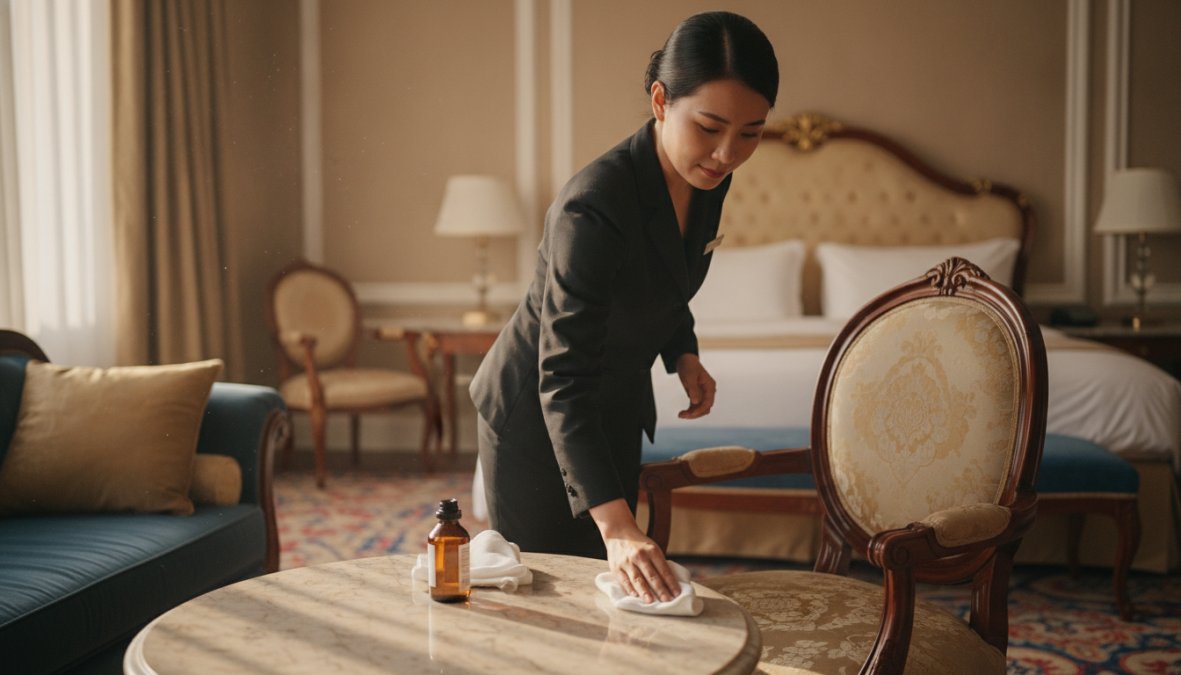
Regular cleaning prevents wear. Daily dusting and weekly deeper cleaning keep furniture in good condition. High-quality materials tolerate aggressive cleaning better than cheap materials.
Repairability is an underestimated aspect. Solid wood can be sanded and refinished. Upholstery can be replaced. Metal parts can be polished. Cheap furniture often cannot be repaired – it must be replaced.
A good supply of spare parts is important. If a chair is damaged, the cover should be replaceable. If a table leg breaks, it should be repairable. Casa Padrino offers spare parts and repair services to maximize the lifespan of furniture.
Professional maintenance is more cost-effective than frequent replacement. A piece of furniture that lasts 20 years is more economical than three pieces of furniture that last 7 years each.
| Material Type | Recommended Cleaning Frequency | Maintenance Effort | Repairability |
|---|---|---|---|
| Solid Wood | Weekly | Moderate | Excellent |
| Polyrattan | Monthly | Low | Good |
| Stainless Steel | Weekly | Moderate | Excellent |
| Solution-Dyed Acrylic | As needed | Low | Good |
| Laminate | Weekly | Low | None |
The durability of hotel furniture ultimately depends on a combination of high-quality materials, good craftsmanship, and consistent maintenance. Cheap materials save money on acquisition but cost significantly more over their lifespan.
The best materials for durable hotel furniture are an investment in the hotel’s future. Solid wood, stainless steel, high-quality upholstery fabrics, and certified fire protection treatments create an interior that not only looks elegant but also lasts for decades. Casa Padrino understands these requirements and offers luxury furniture with traditional European craftsmanship, specially developed for professional hotel operations. With our luxury hotel furniture service, you receive tailor-made solutions that delight your guests and reduce your operating costs. Discover our custom-made furniture and interior design solutions for hotels – we help you find the perfect balance between luxury and durability. Visit Casa Padrino today and let our experts advise you on how to create a timeless interior with the best materials for durable hotel furniture.
Frequently Asked Questions
Which wood species are best suited for durable hotel furniture?
Hardwood species such as teak, oak, and walnut are ideal for hotel furniture as they offer natural wear resistance and durability. These materials withstand daily wear and tear and develop an elegant patina over time. High-quality surface coatings additionally increase the durability and ease of maintenance of this high-quality craftsmanship in the contract sector.
What is the difference between solid wood and engineered wood in hotel furniture?
Solid wood offers superior durability, repairability, and aesthetics, but is more costly. Engineered woods like MDF and laminate are more cost-effective and easy to care for, but have a limited lifespan. For mid-range hotels, engineered woods with high-quality surface coatings offer an excellent cost-benefit ratio, while luxury hotels benefit from solid wood.
How do you properly care for heavy-duty hotel furniture fabrics?
Solution-dyed acrylic and polyester upholstery fabrics should be vacuumed regularly and cleaned with a mild detergent when necessary. These materials are mold-resistant and breathable, which improves the indoor climate. High-quality fabrics with high rub counts withstand intensive use – regular care significantly extends their lifespan.
Which certifications are important for hotel furniture?
Fire safety certifications according to DIN 4102 and EN 13501 are essential for hotel room interiors. These ensure safety and meet legal requirements. In addition, furniture should meet hygiene standards and be disinfection-resistant – particularly important following the increased demands for cleanliness and health in the hospitality industry.
Are metal furniture and stainless steel durable alternatives for hotels?
Yes, stainless steel and high-quality metal types offer exceptional durability and wear resistance. They are easy to clean, hygienic, and ideal for modern hotel designs. Stainless steel furniture resists corrosion and intensive cleaning, making it particularly valuable for the contract sector. Its high-quality craftsmanship enables a long service life.
How do I recognize high-quality hotel furniture quality features?
High-quality hotel furniture is characterized by stable construction, premium materials, and precise craftsmanship. Look for reinforced corners, high-quality fittings, and robust frames. Certifications for fire protection and durability are important quality features. Repairability and the availability of spare parts are also indicators of professional contract furniture.
Which outdoor materials are weather-resistant for hotel terraces?
Polyrattan and synthetic weave are UV-resistant and weather-resistant, making them ideal for outdoor areas. These materials are easy to care for and mold-resistant, which makes them perfect for various climates. HDPE plastics and special coatings additionally increase durability and resistance to environmental influences.